The question “The dinosaurs of the birds?” It may seem strange at first glance, but the answer is, yes, they really are part of this group. Modern birds are, in fact, direct descendants of dinosaurs, specifically a group of dinosaurs called theropods. This amazing bond between birds and dinosaurs not only changes the way birds see, but also gives us a new perspective on the history of life on Earth.
The dinosaurs of the Theropoda group, which emerged 230 million years ago, living between the Jurassic and Cretaceous period. These animals share characteristics with modern birds, such as similarities in bone structure and the presence of penalties.
It is also from this group that has begun a trend of size, in addition to the predominance of bipedalism, that is, a stance is created in which two later limbs, the legs, support the body. Although the dinosaurs were very different from the birds we know today, many of these species of theopods were already penalty, which indicates that the feathers evolved long before the birds arose.
Stephen L. Brusattee and collaborators’ 2015 article explores how birds evolve from Teopod’s dinosaurs during the Jurassic, emphasizing that characteristics such as feathers and light skeleton are gradually developing. He also discusses how, after mass extinction at the end of the Cretaceous, the surviving strains of modern birds could be diversified rapidly, giving rise to the wide variety of species observed today.
What do fossils tell us?
Fossil evidence is essential to understanding life millions of years ago, as is the environment. From them he was also able to understand the relationship between birds and dinosaurs, through dinosaur fossils that have similar poultry characteristics such as penalties and some bones.
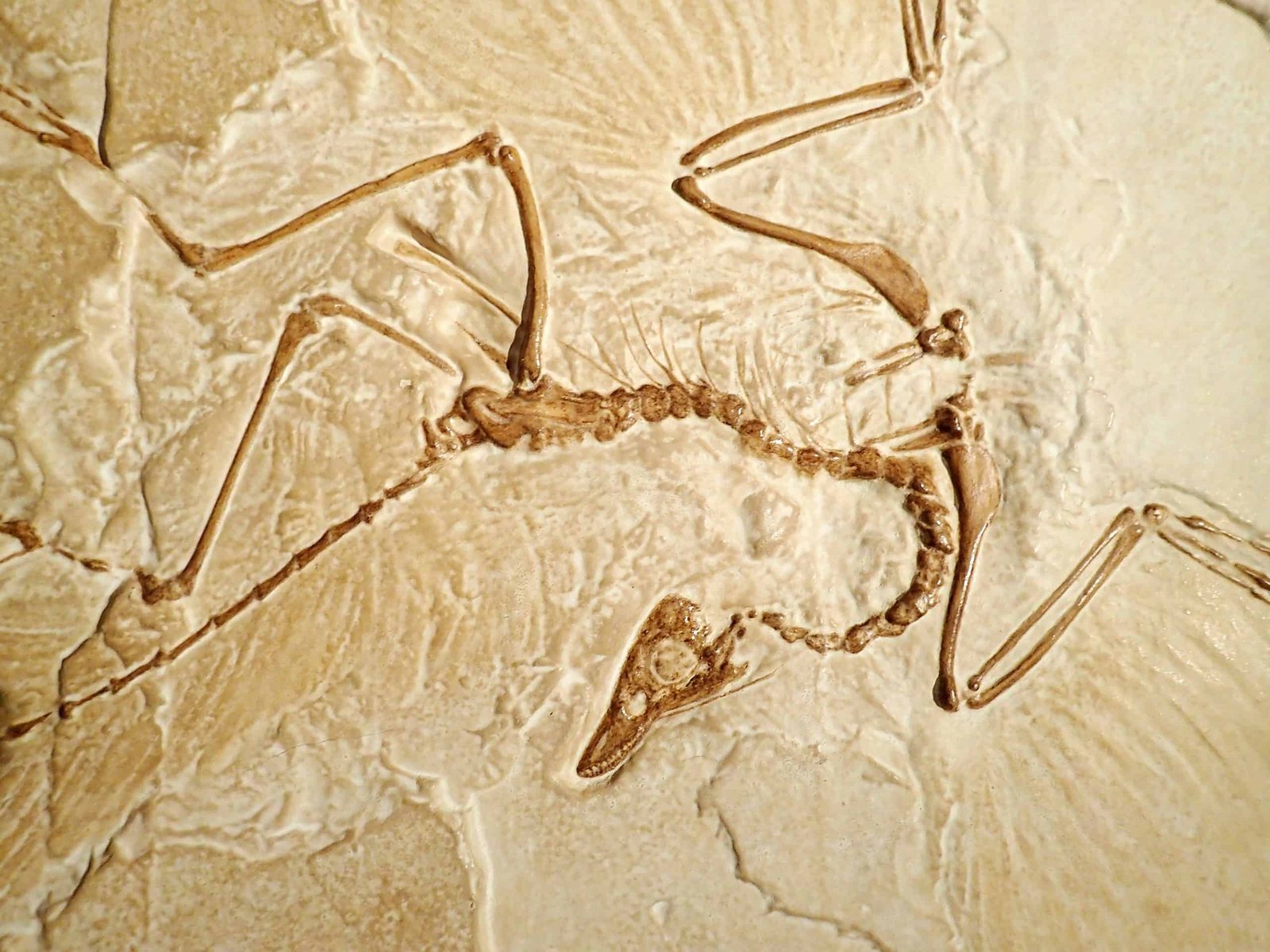
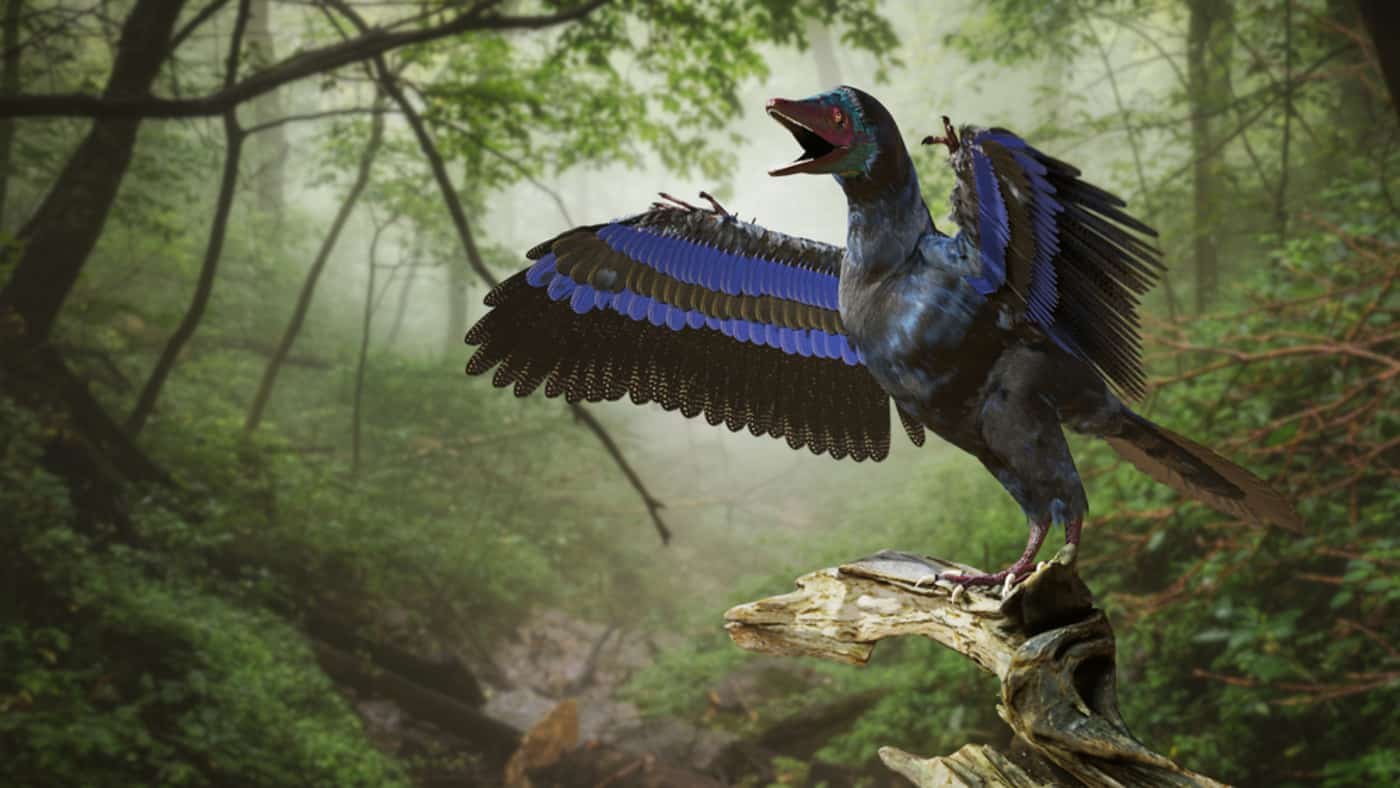
The hypothesis of this initially controversial relationship has been accepted due to fossil discoveries, including ArcheopteryxIt had characteristics of both birds and reptiles, with a long tail, teeth and feathers! He lived about 150 million years ago, and the emergence of evolutionary novelty was noticeable, unlike others, Hallux is inverse. The finger I (Hallux) no longer turns up, there is a turn and, therefore, allows the birds to pay attention to excitement.
Studies have also shown that birds share many genes with dinosaurs, especially with theopods. These studies confirm that, through a series of evolutionary adaptations over millions of years, Theopod dinosaurs originated the birds as we know today.
How did the dinosaur birds come?
The transition from Theopod Dinosaurs to the birds was a number of important changes. Initially, the source of penalties may be related to body isolation to help regulate the temperature, as well as the cutting function when finding a partner, but they finally became essential for flight.
Size was also an important factor in this evolution. Teopod dinosaurs tended to decrease in size, which facilitated flight and survival in smaller and wooded environments. There were also significant bone modifications: the clavulas merged, forming the repentance (or “lucky bone”); The sternum in the form of a keel to support the pectoral muscles; Light pneumatic bones have helped reduce weight, as well as tooth loss; And the bone tail was shortened, with the final fused vertebrae forming the pig! This development of the light skeleton and the wings gradually occurred, making them more capable of flying.
Read -Ne more
And how did the extinction occur?
The mass extinction at the end of the Cretaceous, called the KT (Cretaceao-Tercia) extinction, 65 million years ago, delimited many non-aviator dinosaurs and archaic birds, while some modern bird lines already existed, such as the Neornithe, survived and diversified rapidly, becoming the only remaining descendants of the group. Phylogenetic studies indicate that this diversification occurred shortly after extinction
The importance of connecting birds and dinosaurs
Knowing that birds are dinosaurs completely change our vision of these animals and the history of life. The evolution of birds shows how organisms can adapt and evolve in response to environmental pressures, developing complex characteristics. Today, the birds represent the only group of surviving dinosaurs, which makes them a living bond with the prehistoric past, helping us to understand how life has evolved on earth over time.
So when we look at a bird, like a sparrow or an eagle, we can remember that it carries its genes and an anatomy the inheritance of the creatures who dominated the planet millions of years ago. This helps us to better understand how life has evolved and diversified on Earth over time.