
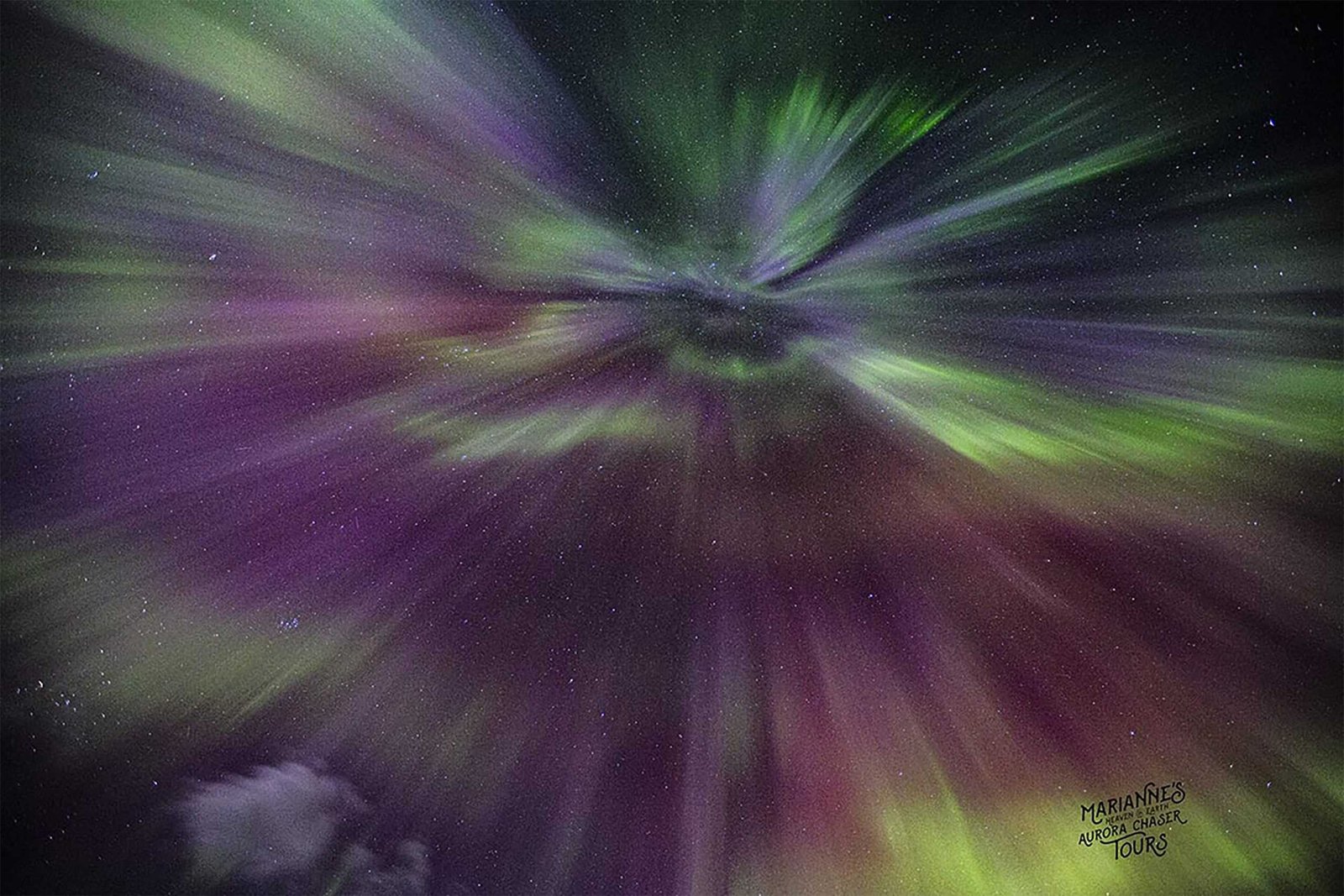
A geomagnetic storm that is expected to reach Earth on Wednesday (25), came in advance, according to the Space Observation Guide Earthsky.org. The episode was a consequence of a coronal mass expulsion (CME) released by an explosion in the Sun, which was “turbolery” by an additional event: the equinox (you will understand it later).
According to the Platform of Meteorology and Space Climatology Spaceweather.comOn Sunday (22), a Class M (moderate) solar eruption was broken from the sun’s sun. According to experts, this event was amazing, as this region of the Sun seemed too stable to cause an explosion in these proportions.

Also called “Jet de Plasma Solar”, CME traveled more than one million kilometers per hour, partially collision with the Earth. As expected, most of the solar material passed near the planet, with a small tangential impact that reaches the magnetosphere, the protective magnetic barrier of the globe.
This happened on Tuesday night (24), at 9pm (for Basilia Time). A second three -hour period of storm started at dawn, around 2:45 AM. Auroras’s exhibitions were seen in Scandinavia and the northern end of the North -American continent.
About last night.
Aurora Borealis on Washington’s Methow Valley
(Picture or embedded)
– David Brunelle (@Davidbrunelle.com) September 25, 2024 at 10:22
Read -Ne More:
The Spring Equinox has driven the geomagnetic storm that affected the Earth
This type of “look” does not usually produce a significant geomagnetic storm, but this time a particularity made a difference: the solar explosion occurred in the spring equinox, which increases the possibilities of occurrences.
Relationship between geomagnetic storms and equinox:
- There are two occasions a year when the day and night is almost 12 hours each: one in March and one in September, both called Equinox;
- Due to the irregular orbit of the Earth around the Sun, these dates go from year to year, with the first that occurs between March 20 and 21, and the second, between September 21 and 23;
- During the equinoxes, moments when the earth’s axis aligns with its solar orbit, the Earth is not included in relation to the Sun, which facilitates the alignment between the magnetic field of the planet and the plot;
- This process, known as the “Russell-Mcpherron effect”, was proposed in 1973 to explain the increase in the frequency of storm during equinoxes;
- Historical data from 1932 to 2014 show that geomagnetic storms occur on average twice more during equinoxes than in solstices (when the Earth’s poles are directly oriented to the Sun and the magnetic alignment is lower).
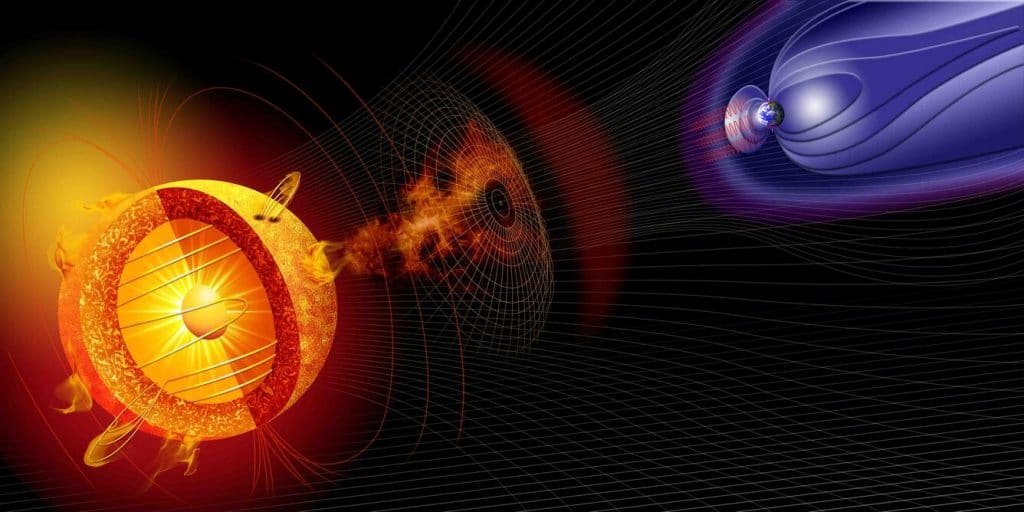
Geomagnetic storms can alter communication systems, electricity networks and, in more severe cases, cause satellite spaghetti and orbit. They also usually generate auroras in the regions of extreme latitudes (boreal, north and south, south), caused by the interaction of solar particles with the Earth’s atmosphere.
The U.S. Atmospheric Administration and the Atmospheric Administration of the Ocean and Atmospheric Administration uses a G1 a G5 scale to classify the severity of these storms. The recent event was classified as G1 (weak), with minimal impacts and limited risk to infrastructure in the north of the planet.