
All about China
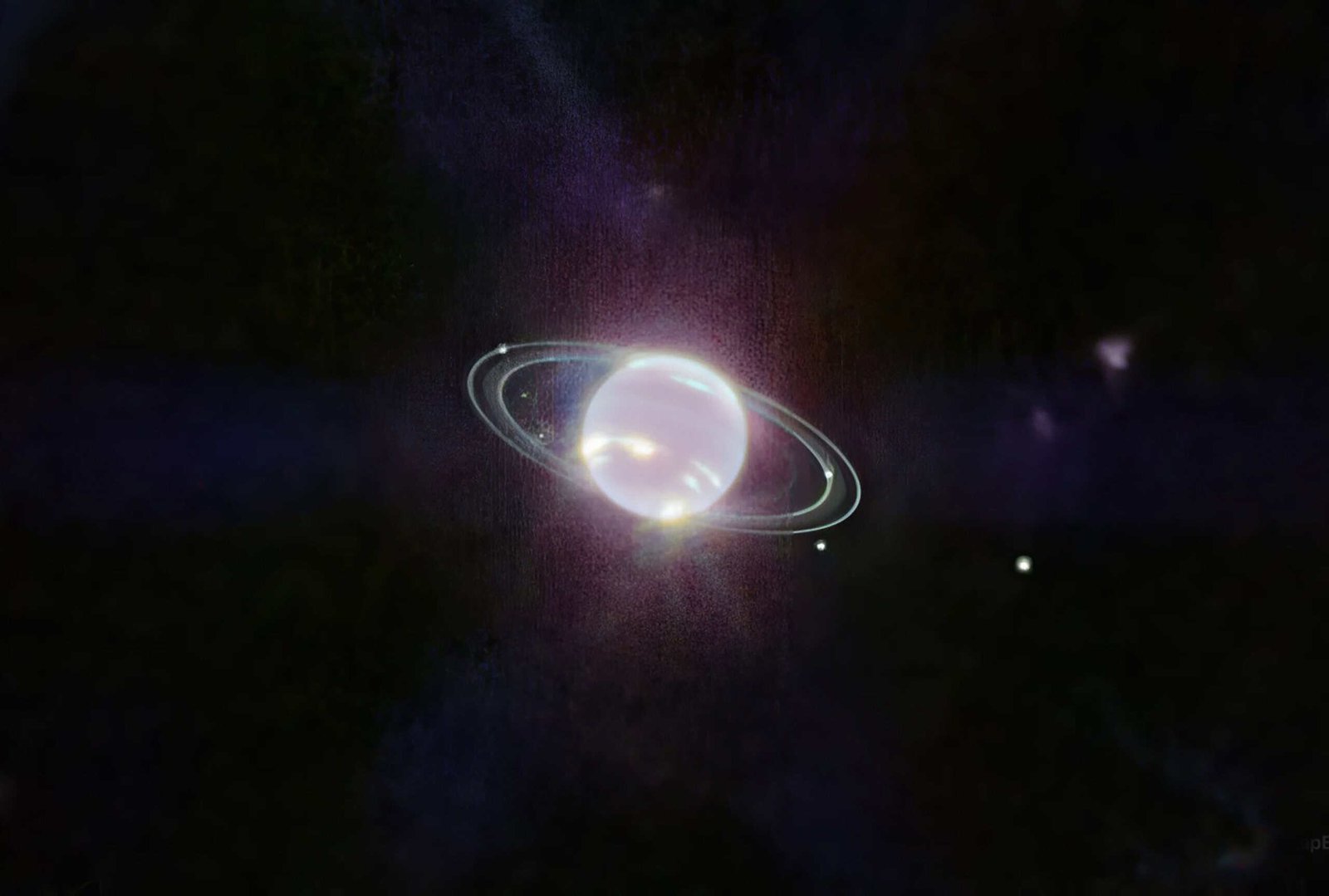
To date, only a spacecraft has wanted Neptune. Voyager 2, which is currently more than 20 billion km from Earth, has passed near giant ice cream in August 1989. China has now announced that it is planning to be the next to explore the last planet in the solar system, as well as Trittão, one of its 16 moons.
For those who are in a hurry:
- China will closely launch a mission to explore Neptune and its Triton moon;
- Only a spacecraft, to date, has approached the planet;
- It was the United States probe Voyager 2, which only went through the ice giant;
- The Chinese mission will already enter the orbit of Neptune, in an unprecedented feat;
- The boat will have instruments to study the atmosphere, rings, magnetic field and the possibility of life.
- Instead of solar panels, radioisotopic generators will be fed, as the sun is far away.

What will the Chinese Mission Neptune be like
An article published earlier this month at the Chinese Aeronautics Magazine Details the future Chinese mission in Neptune. The proposal provides for a trip of about 15 years on the planet, followed by entry into the orbit (which Voyager 2 did not do). Then the spacecraft would use the gravity of Triton’s moon to adjust its trajectory and make in depth observations.
According to the document, arriving at the destination, the boat will launch a probe that will enter the atmosphere of Neptune to collect directly data. In the meantime, the orbit will examine the rings of the planet, its geological activity and its magnetic field. The possibility of life in the underground ocean of the enigmatic Tritão moon will also be investigated.
One of the great technical challenges is energy generation. Neptune is more than 4.5 billion kilometers from Earth, a distance where solar panels do not work well. Therefore, the mission would use the energy generators of the radioisotopes, which constantly provide electricity, even in a deep space.
The Chinese spacecraft should have 11 scientific instruments, including sensors to measure magnetic fields, radio waves, particles and dust. It will also be equipped with cameras and spectrometers to observe different types of light, from infrared to ultraviolet. To ensure navigation, it would use advanced technology capable of guiding -with pulsar signs, stars that emit x -Rayes.

Before thinking of Neptune, China has been expanding its ambitions in space. In 2021, the country successfully landed in Rover Zhurong on Mars with the Tianwen-1 mission. In May of this year, he launched Tianwen-2 to collect samples from an asteroid and visit a comet in the next decade. Tianwen-3, scheduled for 2028, should bring samples of Mars. With the Tianwen-4 mission, the country intends to study the Jupiter system and fly on Uranus.
Read -Ne More:
China must become the first country to enter the ice giant’s orbit
Discovered in 1846, Neptune is the most distant planet of the Sun in the solar system. With winds faster than those of any other known world, it also has secrets about its magnetic field and the internal structure, which makes direct exploitation essential for science.
The Triton Moon is one of the most interesting natural satellites in the solar system. Orbit Neptune in a retrograde direction in relation to the rotation of the planet. This may mean that it was probably captured from the Kuiper Belt, a region full of cold bodies well after the giant cold. Triton has a frozen crust, which expels the jets and gas particles, such as small volcanoes that release steam and ice instead of washing. These jets, called geyings, were observed by Voyager 2, which indicates the geological activity.

Scientists believe that this feature is an indication that Trittão houses an underground ocean of liquid water below the ice cortex. Although this does not guarantee the existence of life, the presence of liquid water is one of the basic requirements of habitability.
If approved, this mission will be the first to put a boat in orbit around Neptune. The project was prepared by experts from the Beijing Systems Institute of Systems Engineering and the Academy of Chinese Space Technology (CAST), responsible for other important missions, such as the Lunar Chang’E and the Tianwen planetarium.
The Chinese mission in Neptune and Triton is an ambitious breakthrough in spatial exploration. In addition to looking for answers on the origin and structure of these distant worlds, it can reveal clues to the possibility of life in extremely remote regions of our cosmic neighborhood.