The NASA Voyager 1 spacecraft launched more than 47 years ago and continues to collect important data in space. One of the awesome records of the boat is the Sound of the solar wind that “beats” in the magnetic field of Jupiter.
The noise is similar to that of the fall made by a supersonic plane, but everything happens naturally. Listen to the sound and understand this phenomenon.

The sound comes from the shock between the solar wind and the magnetosphere
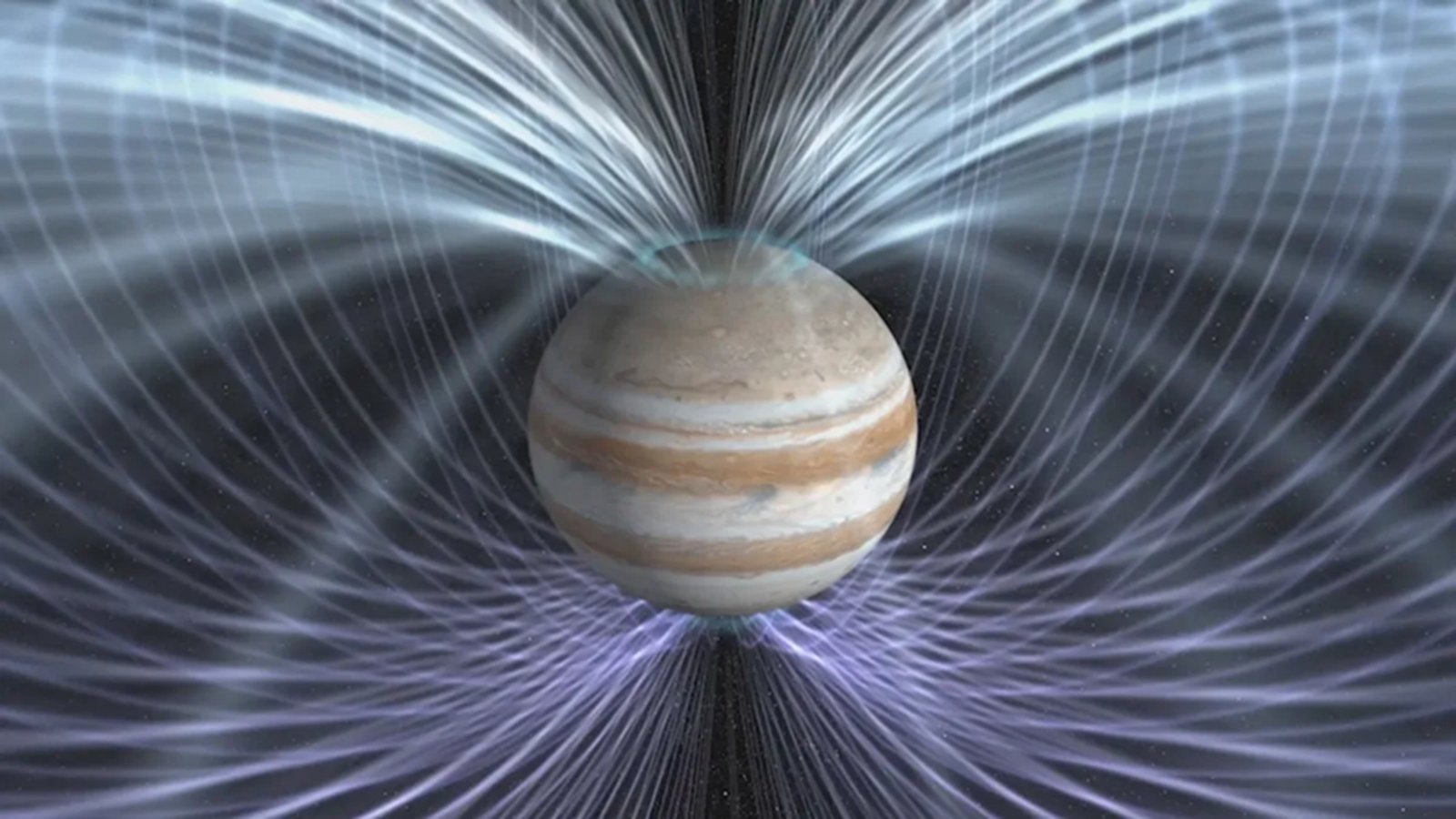
We take a step back. As the site has been explained IflscienceIf a planet has a magnetic field, it has a magnetosphere. This is the space where the magnetic field is to protect the planet from the radiation that comes from the sun.
The land has one. Jupiter also and can be 16 to 54 times stronger than ours. The magnetic field there can be extended by more than 3 million kilometers to the Sun, reaching almost the orbit of Saturn (neighboring planet).
When the solar particles find the magnetosphere, they suffer a deviation, as if it were a flow of running water that beat a stone along the way. In practice, the solar wind plasma, which runs at a speed of about 400 kilometers per second, faces this field and slows down. This meeting point between the two is called the bow crash.
Imagine -now the solar wind at 400 km per second, reaching a magnetosphere of millions of kilometers. The result is impressive.

Voyager 1 caught sound of jupiter
In 1974, the Pioneer 10 and 11 probes of NASA captured the sound of the bow of bow in Jupiter. At that time, they found that the magnetosphere of the planet was much less than expected, due to the intense solar wind that compresses the region. This causes a phenomenon of mass heat within this layer, which warms up regions of up to a quarter of Jupiter (and this happens several times a month).
The duo opened its way to Voyager 1, launched in September 1977, also with the aim of studying the giant planet.
Listen to the sound of Bow Shock captured by the probe:
In 2016, the Juno probe also crossed Jupiter’s shock barrier and captured the sound. Listen:
Read -Ne More:
Jupiter is an extreme world
- Each probe, from the first pioneers to Juno, leaves no doubt that Jupiter is an extreme world full of mysteries;
- For example, Voyager 1 found that the 3 million kilometer magnetosphere was really much less than expected and had warming effects on the planet;
- Juno found that the “border” between the magnetosphere and the space, where the solar wind arrives, is even more complex than we imagined the previous missions.
That is, we probably still have a lot to learn from Jupiter.