Follow Olhar Digital on Google Discover
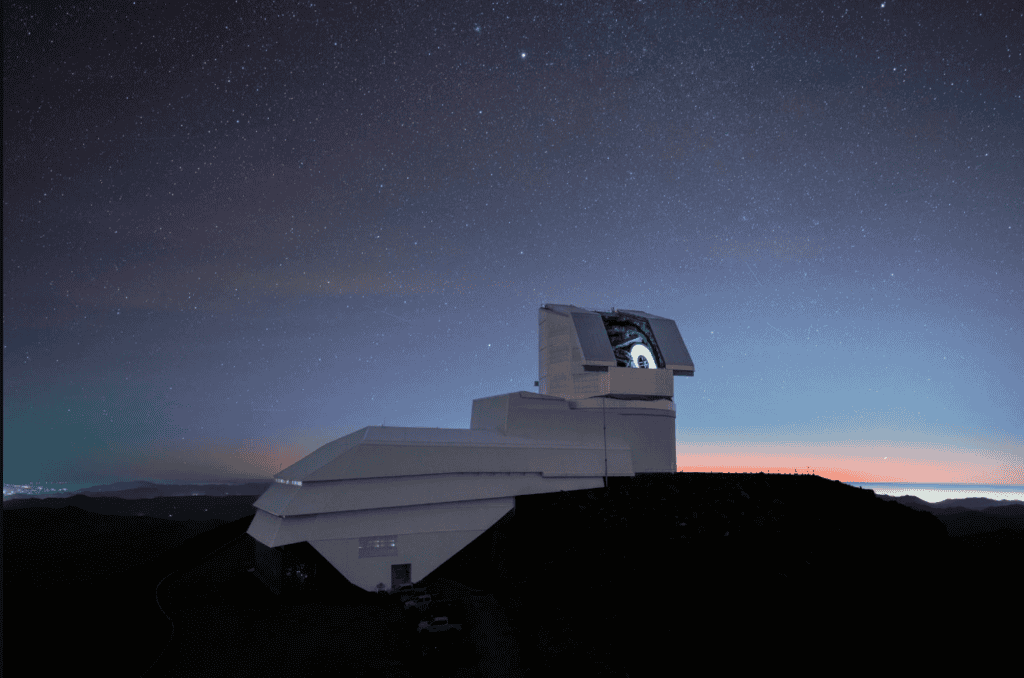
The Vera C. Rubin Observatory is located in the Atacama Desert in Chile. It is an eight-story structure focused on cutting-edge research, funded by the US government, but also home to Chilean astronomers.
Rubin’s telescope has a huge billion-pixel camera and is capable of mapping the entire night sky every four days, putting it far beyond any other ground-based device.
Rubin is in the testing phase and should begin formal operations in October. After that, it hopes to gather more astronomical data in a single year than all other similar observatories have gathered throughout history.

(Image: RubinObs/NOIRLab/SLAC/NSF/DOE/AURA)
But there’s one problem: The Rubin Observatory can’t do it all alone. Its wide-field telescope is great for spotting objects, but researchers need another tool to study them in depth, search for life in other solar systems and examine forming galaxies. The project that would meet this need is the Giant Magellan Telescope (GMT), located about 130 km north of Rubin. GMT is still in its early stages, and the site looks more like a series of large holes in the ground, with some support buildings and service infrastructure. Information is from the Bloomberg website.
Read more:
The impact of cuts to the National Science Foundation
Cuts made by the Donald Trump administration in federal funding for scientific research could threaten the operation and completion of both projects.
The National Science Foundation (NSF) spent nearly $600 million to help build the Rubin Telescope, and the Department of Energy contributed an additional $320 million. Its operation is expected to cost about 80 million dollars a year. As for GMT, private partners, primarily major U.S. universities, funded most of the first billion dollars in construction costs. However, the GMT project will need up to $1.3 billion from the NSF to complete construction and become operational by 2035.
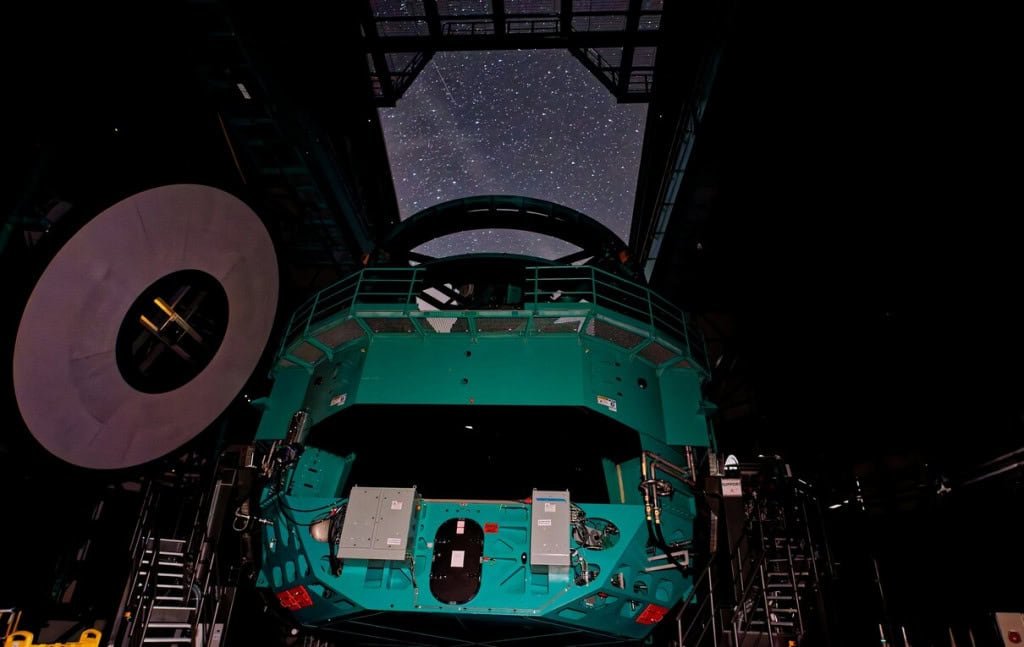
(Image: RubinObs/NOIRLab/SLAC/DOE/NSF/AURA/W. O’Mullane)
This year, the NSF has been hit by Trump’s cuts, which are criticized even by conservatives.
The main consequences of the budget reduction were:
- Reduction of the workforce from about 1,800 workers and contractors to about 1,100, according to the union that represents the workers.
- Cut half of the budget planned for 2026.
- Significant drop in grant funding for postdoctoral fellows and graduate students.
- Difficulty in attracting and retaining young researchers, essential for operating and analyzing observatory data.
- Risk of compromising the construction of the Giant Magellan Telescope (GMT), which depends on NSF funding.
The board overseeing the GMT project says it is committed to privately funding the current phase of the project and will look to expand its list of international partners, which already includes research institutions in Australia, Brazil, South Korea and Taiwan.
US astronomers warn that reducing support for GMT and other Chile-based projects could mean ceding the next generation of telescope-driven discoveries to international competition. This includes China, which has already set up a radio observatory in Argentina and is working on another optical telescope project in the Atacama desert, although it is still awaiting approval from the Chilean government. This telescope is not expected to be as powerful as those in the US or Europe, as it will likely be smaller, although its exact size is still unknown. The Chinese government has already shown it can quickly catch up with competitors, says Rebecca Bernstein, chief scientist of the GMT project. On its own territory, China is building the world’s largest single-dish radio telescope, with a reception area equivalent to 30 football fields. If the U.S. doesn’t complete the GMT to study Rubin’s team’s findings, Bernstein says, “all you’ve done is find them and make them available to your competitors.”
The NSF spokesperson said there is still plenty of funding available. “NSF continues to invest heavily in programs that support students, early-career researchers, and cutting-edge research,” he said. “We remain focused on ensuring that America remains a world leader in science and innovation.”
The power of telescopes
To give an example of the difference these cutting-edge facilities can make: telescopes around the world typically discover about 20,000 asteroids in our solar system each year. During a week of testing in June, the Rubin Observatory detected just over 2,000, including seven classified as near-Earth objects. “Everything we know represents only 5% of the universe,” notes Karla Peña, Rubin’s principal observational specialist. On their to-do list is a map of the boundaries of the Milky Way beyond our solar system, which could help identify other planets capable of supporting life.
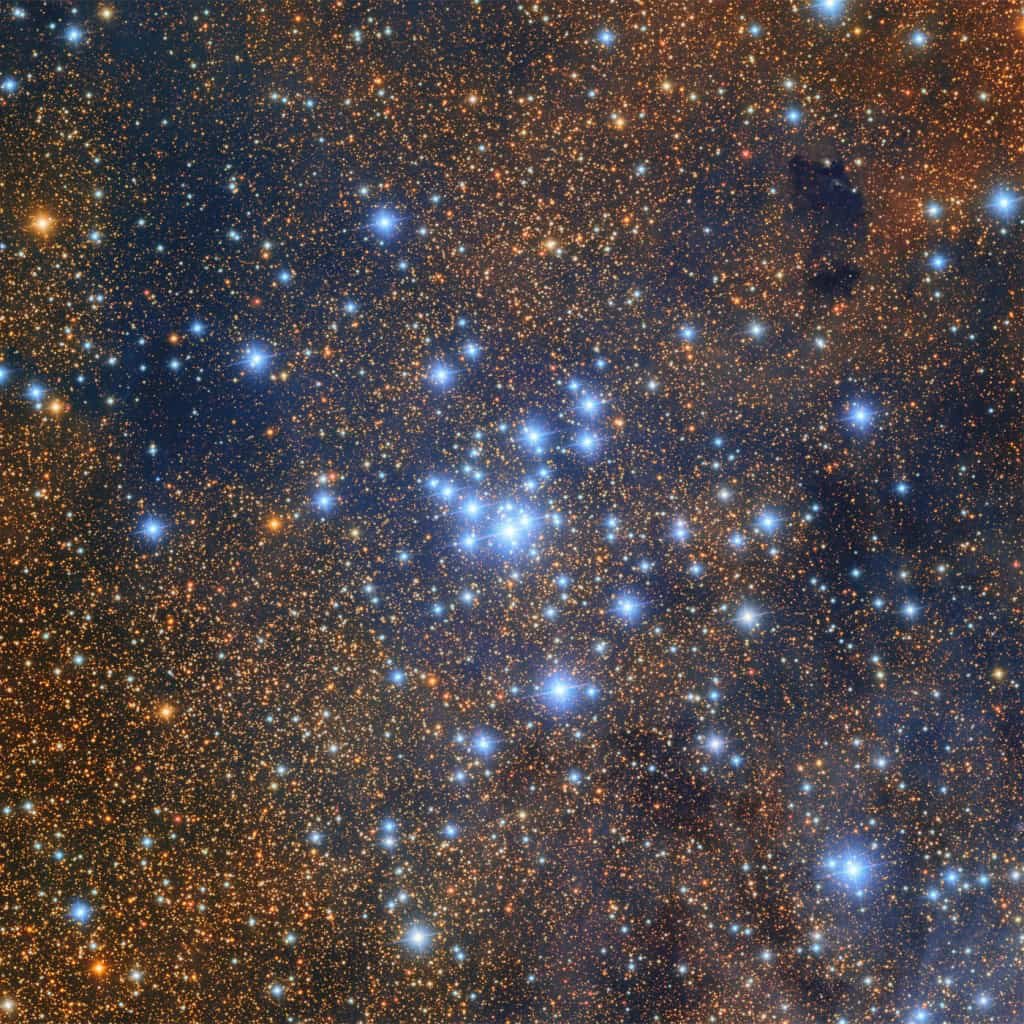
(Image: RubinObs/NOIRLab/SLAC/NSF/DOE/AURA)
For now, the GMT project continues to develop components for its future megatelescope. The team requires seven mirrors that, according to project managers, are among the largest ever constructed from a single piece of glass, each measuring about 8.5 meters in diameter. The mirrors take up to four years to make, and there is only one furnace in the world capable of producing them, located beneath the University of Arizona football stadium.
While the Rubin telescope undergoes final tests before it goes into operation, all captured data is stored in a laboratory in the United States. To investigate possible anomalies, it will be necessary to use other telescopes located in Chile.
Despite the technical advances, there are concerns about the observatory’s operational funding. The team fears that federal budget cuts will compromise the project’s continuity, especially given the contradiction between the discourse of US scientific leadership and the reduction of investments in science.