

The 4.56 billion-year-old McDonough meteorite hit the roof of a house in the US on June 26

Follow Olhar Digital on Google Discover
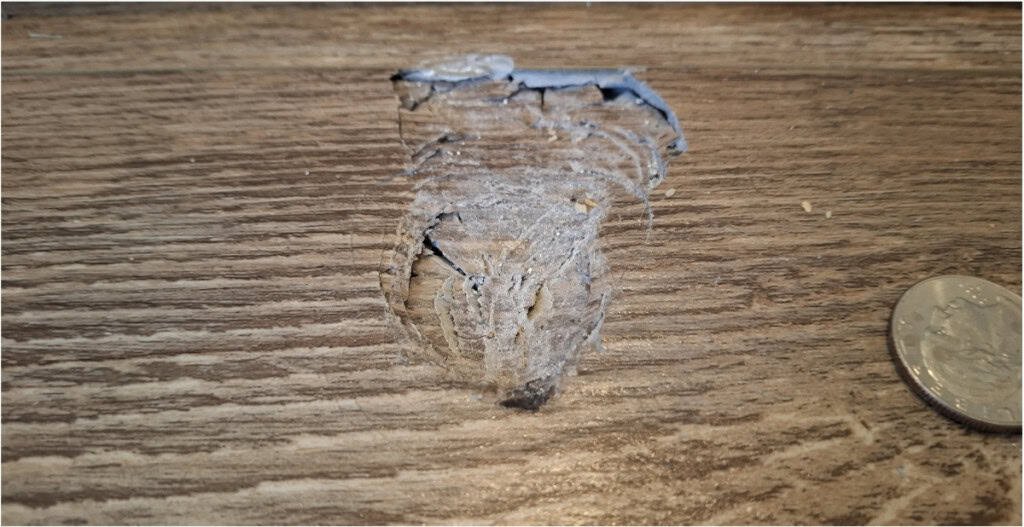
On June 26, 2025, a meteorite hit the roof of a house in Atlanta, USA. But, before reaching Earth, the space rock had a long journey – and a long one: formed about 4.56 billion years ago, the fragment – which received the name McDonough – is older than our own planet, scientists point out.
Understand:
- A meteorite older than Earth fell into a house in the US on June 26;
- The fragment of space rock is about 4.56 billion years old, as revealed in the analysis;
- The researchers managed to recover 23 of the total 50 grams of the meteorite, which broke on impact;
- The rock came from a group of asteroids in the main belt between Mars and Jupiter, and ended up on a collision course with Earth after a catastrophic event.

The meteorite was analyzed by researchers from the University of Georgia (UGA), who managed to recover 23 of the total 50 grams of the fragment shattered by the impact. In a statement, the team explains that the rock crossed the Atlanta sky during the day, drawing attention when it exploded in a fireball after reaching the Earth’s atmosphere.
Read more:
The space rock that fell in the US is 4.56 billion years old
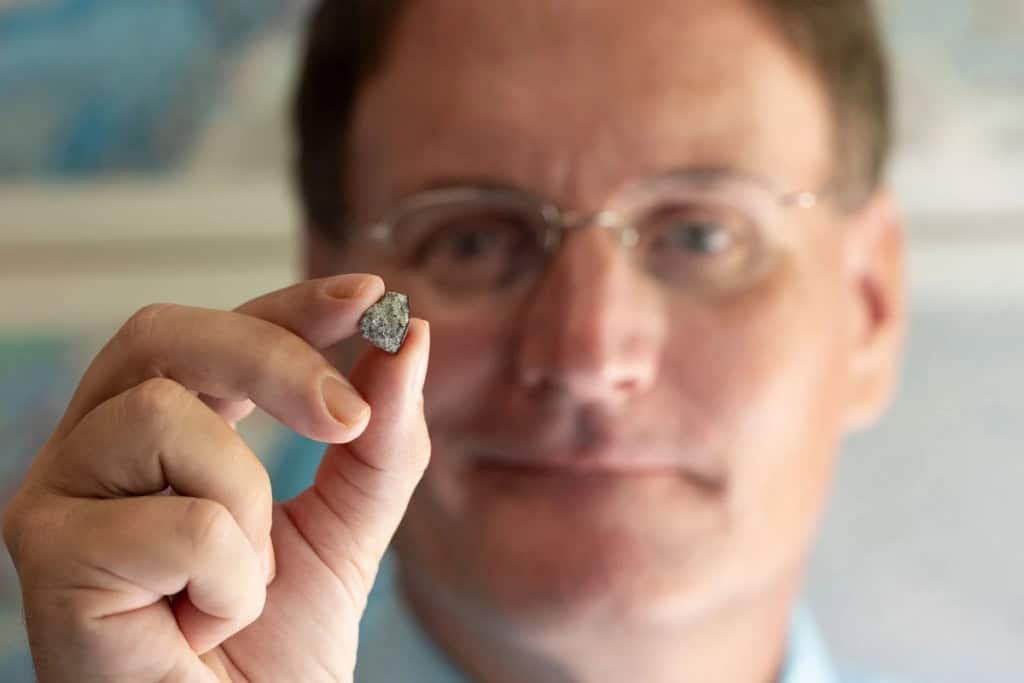
Given that our planet is about 4.5 billion years old, the meteorite that fell in June is several million years older than Earth. And to fully understand McDonough’s background, the team focused on “examining what the rock is and determining what asteroid group it belongs to,” explains UGA geologist Scott Harris.
The fragment was analyzed by optical and electron microscopy, and the results revealed that it was a common low-metallicity, L-type chondrite that formed billions of years ago and ended up on a collision course with Earth in a catastrophic event.
The meteorite will be subjected to further analysis in the future
The team also discovered that the meteor “belongs to a group of asteroids in the main belt between Mars and Jupiter, which we now believe we can associate with the breakup of a much larger asteroid about 470 million years ago,” says Harris.
The meteorite is currently at the University of Georgia, and is due to undergo further analysis that researchers say could reveal more details about the conditions in our Solar System before the planets formed.

Collaboration for Olhar Digital
Ana Julia Pilato has a degree in Journalism from the São Judas University (USJT). He has worked as an editor and social networks. She has two cats and loves movies, TV shows, science and crochet.