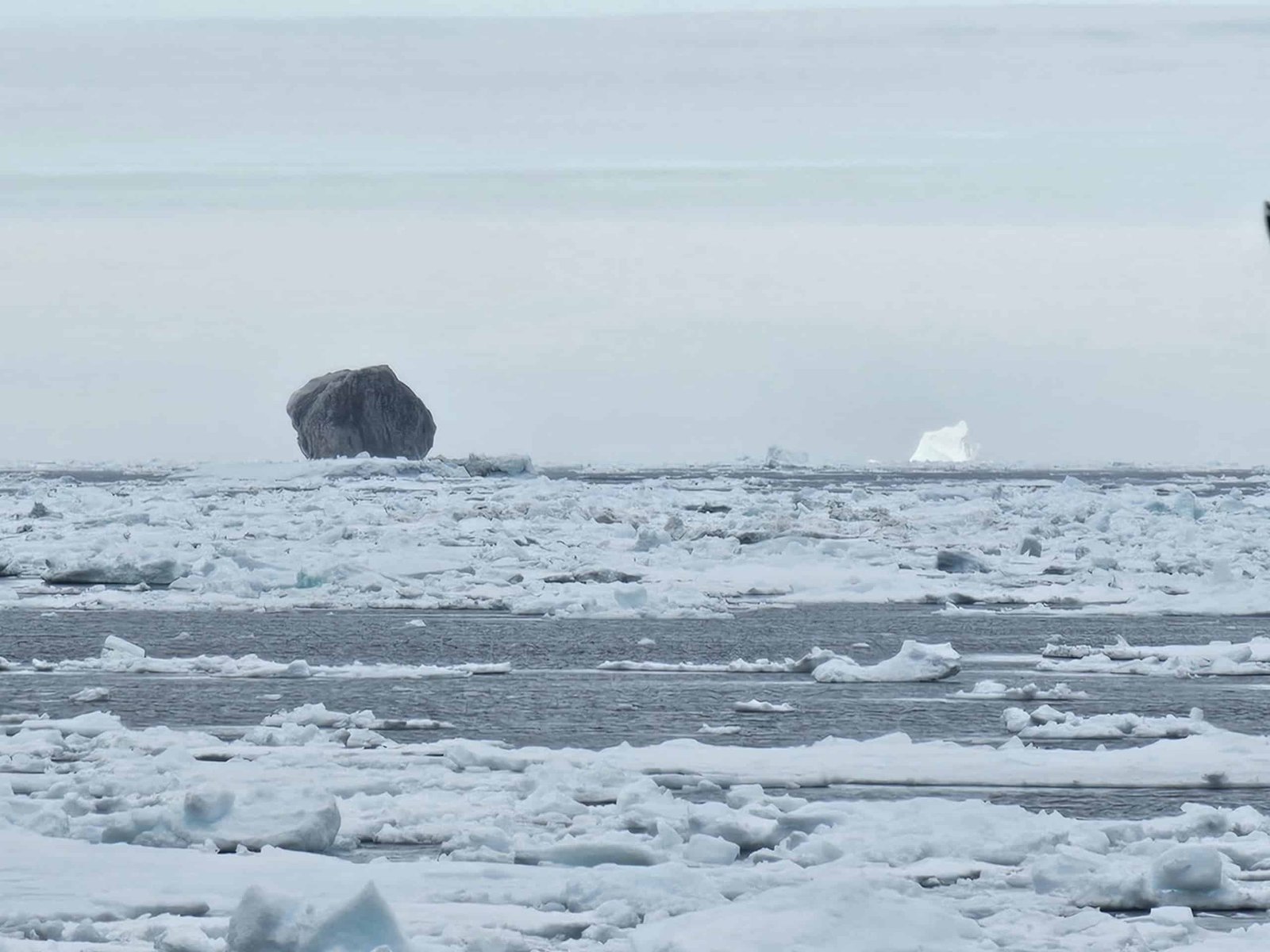
When we think of icerbegs, usually what comes to mind are large rocks of white ice (or in light blue). But this is not the only possibility. A fisherman made an impressive record on the Canada coast in mid -May: a black iceberg.
If you doubt, this is not a fisherman’s story. Hallur Antoniusen published the photos on social networks so no one doubted it. And there is a scientific explanation for this color change.
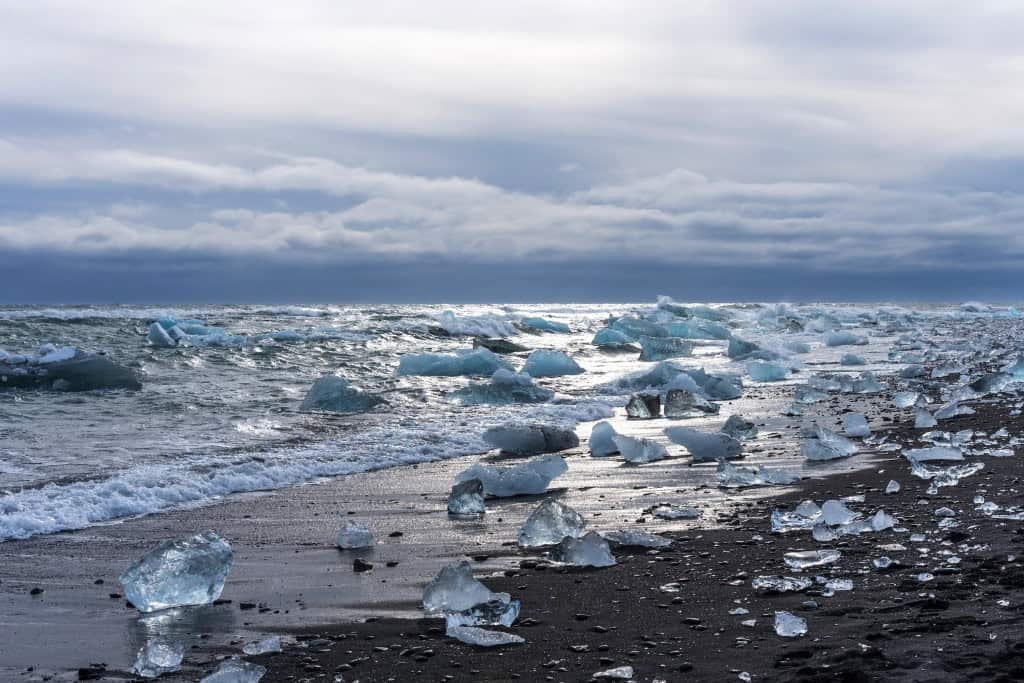
Black Iceberg was seen on the Canada coast
Hallur Antoniusen was on board the Saputi fishing boat on the Canada coast (more specifically, in the Labrador Sea in the North Atlantic) when he saw the black iceberg. This happened in mid -May.
Earlier this month he did an interview on the radio CBC Speaking of the moment and it was revealed to be surprised. See what he said:
I have seen round icebergs, who say they have shot on the beach with some stones. This is completely different. It’s not just that it’s all black. It’s almost … in diamond format.
Hallur Antoniusen, in an interview on CBC radio
He further stated that “it is not such a thing.” And that, because he usually does not walk with a camera while working, had to run and look for his cellphone to take the photo.
Is the black iceberg possible?
Yes.
The reason that most icebergs are white is due to the air inside it. They are full of air bags, which distribute all wavelengths. As the glaciation and lengthens, it expels the air and allows more light to penetrate inside, giving a transparent appearance.
But this is not the only case. Icebergs are not just frozen water. Over time, they also mix with other materials present in the sea and the atmosphere. For example, when they come in contact with iron oxide, they are usually green.
The same goes for black or gray color. When the icebergs come in contact with dirt, soot or some other dark material that ends up accumulating in the ice, the appearance darkens. Even one of the possibilities is that the piece of ice has come in contact with the soot of a large volcanic eruption or with the remains of a meteorite that fell in the region.
There is an alternative explanation
Glacialologist Lev Tarasov of Memorial University in Canada, also in an interview with CBCgave an alternative explanation to the black iceberg:
- One day he may have been part of a larger glacier that came out and fell into the ocean. And while moving to the ground, the ice mixed with other waste and incorporated them, making it dark;
- However, this process takes years. Since the piece of ice that is Antoniusen has a uniform appearance, which indicates that the incorporation has passed over time, Tarasov estimates that the piece of ice is old;
- It is calculated between 1,000 and 100,000 years.
Read -Ne More:
For now, the real reason for the black color is unknown.