
Science lives in logic, rigor and test, but has never prevented a good scientist from having a sense of humor. And, over time or another, to trace in formality. In the midst of complicated formulas, enigmatic graphics and endless bibliographies, stories that challenge the common sand. Stories that reveal unusual heroes and, in some cases, hairy.
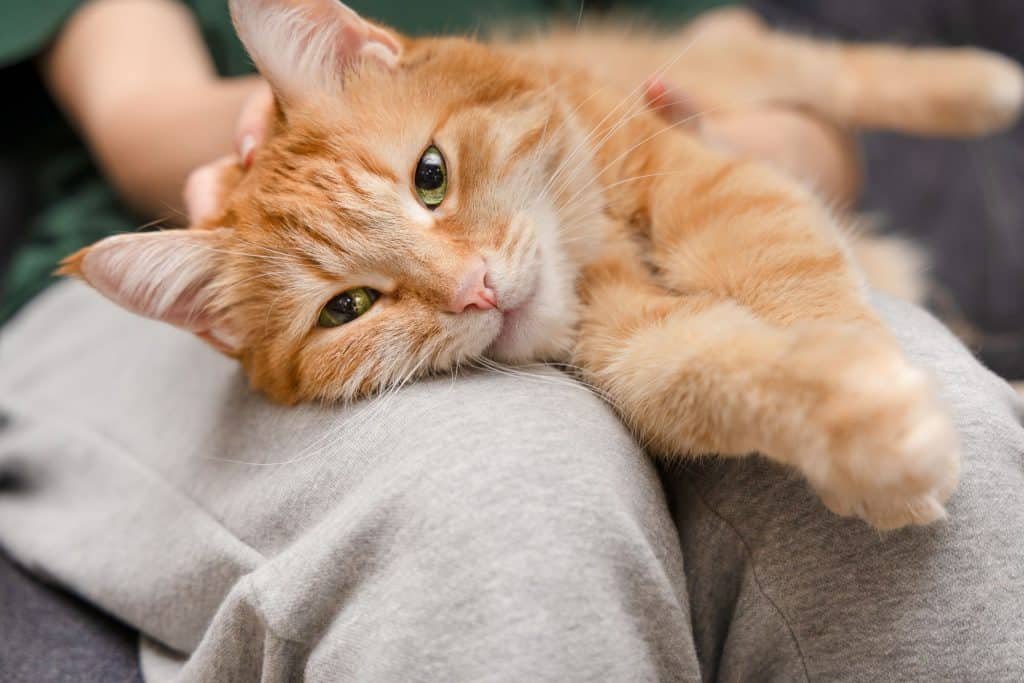
In 1975, Chester, a perfectly ordinary feline, obtained the extraordinary state of CO -author of a scientific article published in a respected journal. Yes, Chester signed a role. And this is not a metaphor.
CHESTER: Know the story of how a cat wrote a scientific article in 1975

Chester was not a physicist and could not know or solve the equations. In fact, he was a pet domestic cat, one of those who climb on the table without a license and are in the important roles.
However, his name ended in the authorship of a scientific article published in the 1970’s, obtaining the state of legend in the corridors of modern science, and, interestingly, he is still remembered as the only feline to know a study of theoretical physics.
It all started at Princeton University in the United States. Physicist Jack H. Hetherington, a researcher at the Department of Physics, wrote a technical article on Heli’s atom atom at extremely low temperatures.
During the preparation of the manuscript, he made a mistake that today would be banal to correct: he wrote the whole article using plural pronouns in the first person, as “we did”, “we observed”, “conclude”.
The problem was that Hetherington was the only real author of the study. And at that time, scientific journals like the Physical Review Letters They had rigid guidelines: we were not allowed to use “us” if the work had only one author.

When he alerted a colleague about this detail, Hetherington faced a choice. It could rewrite the entire article, exchanging pronouns with suitable forms for singular authorship, which would mean re -elaborating and probably losing the presentation calendar.
Or I could find a creative way to avoid the problem. It was when he decided to include a second fictional author in the article: FDC Willard. This name, however, was not randomly chosen. It was a code name for the true “co -author”: his cat Chester.
The full name, FDC Willard, meant “Felix domesticus, Chester Willard” and “Willard” came from the name of the cat’s father. Hetherington thought it would seem serious enough to not arise suspicions. With the added name, he sent the article to the magazine. The text was accepted, published and soon became a reference in the field of liquid helium physics.
The article was published in Physical Review Letters In November 1975 with two credit line authors: JH Hetherington and FDC Willard. And for a long time, no one has all suspected. It was later that Hetherington revealed the truth, laughing at the episode with friends and colleagues.
The case did not cause a scandal, but fell in favor of the scientific community, which has humorously seen the physicist’s engineering solution to an editorial problem. Over the years, history has gained the condition of the academic legend. In 1982, Hetherington even published another article, this time signed by FDC Willard, as an internal joke.
The publication was made in French, in a journal at the University of Grenoble, France. The title dealt with the properties of Helium-3 and Hélio-4, and the content was scientific, although the author’s name was that of a cat. Chester’s article became one of the rare exceptions in which a domestic animal has signed only a real scientific work.
Chester’s case raises curious discussions about scientific authorship, credibility criteria and, of course, the rigidity of certain publishing rules that may end up encouraging unusual situations. At a time when science seeks more and more transparency and ethical in publications, this story is a humorous memory of how creativity and rigor can sometimes collide unexpectedly.
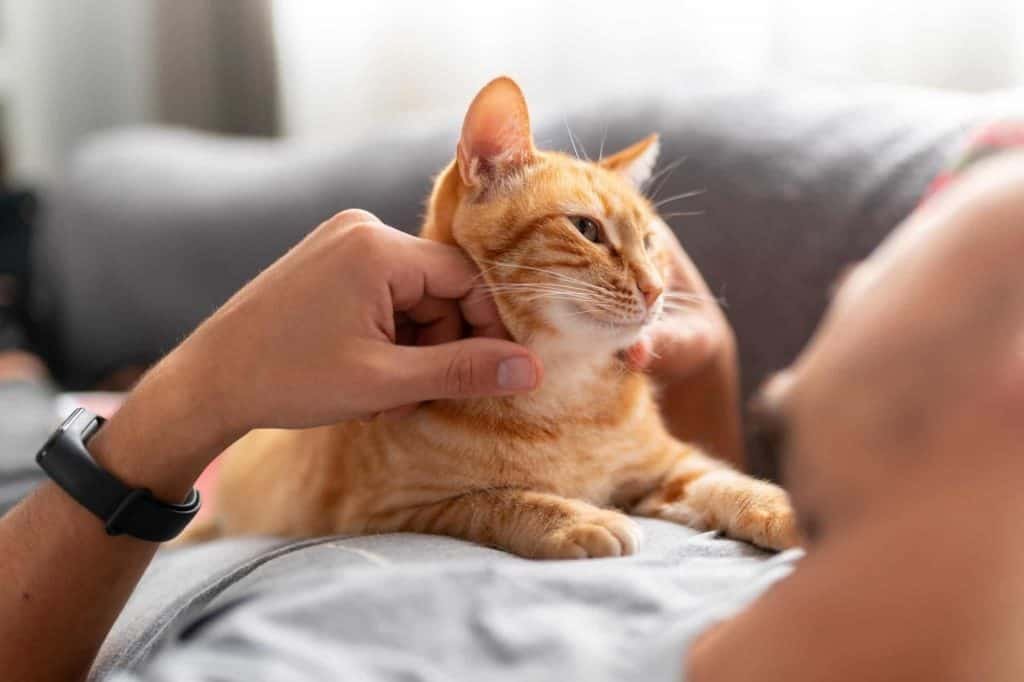
Chester, in turn, gained posthumous fame. His name still appears in academic catalogs and is remembered by many as “only theoretical physical cat” in history.
Although he has never put his legs in a laboratory or written or a formula, his symbolic contribution represents more than one anecdote. It shows how even a pet can be part of the history of science.
It is worth mentioning that, although the episode is seen with sympathy, it would probably not be well received in current standards for couples and demands for academic liability. However, the story about Chester continues to tell universities, congresses and classrooms as an example of humor, creativity and small lagoons that exist even in the most formal environments. After all, who would say that a domestic cat would end up eternal on the pages of theoretical physics?
With information from Live Science.