

Built by the JET (JPL) propulsion laboratory of NASA at a cost of $ 2.2 billion, and was released on July 30, 2020, Rover Perseverance landed on Mars at 5.55 pm (Brasilia time) on February 18, 2021, changing the way to look at the red planet.
Among the scientific discoveries and the collection of marty soil samples, the team has also been recording curious scenes, such as a snake -shaped rock, a solar eclipse, the remains of its own landing equipment and even a “spaghettice portion” and a “snowman”.
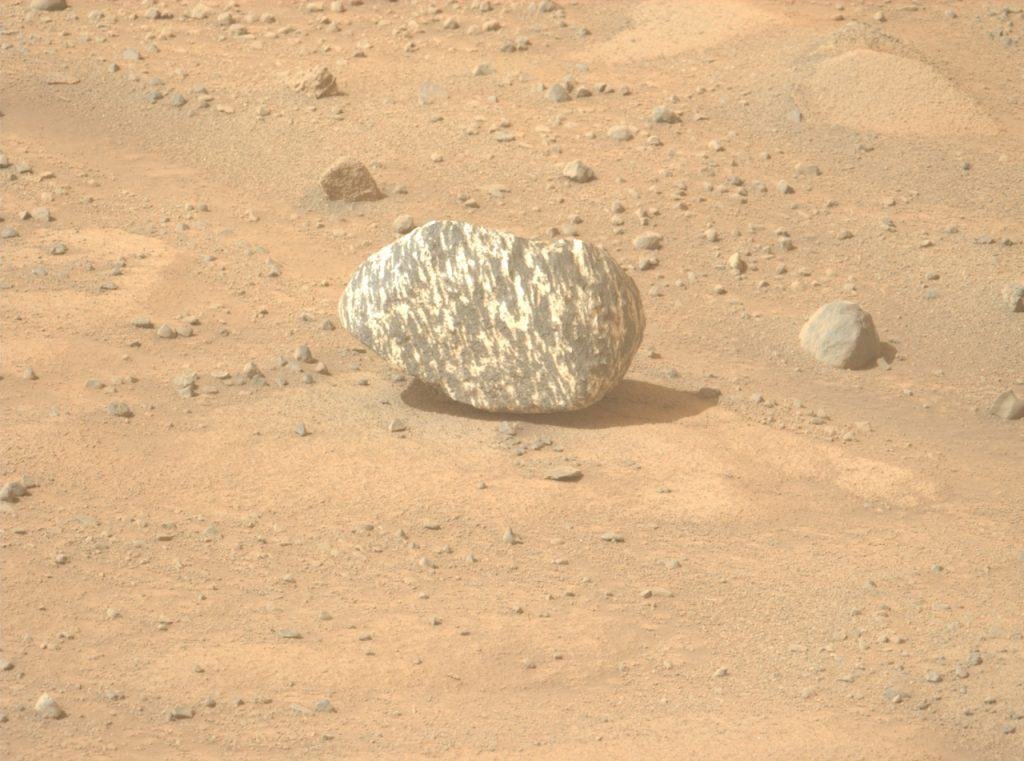
Robotic Explorer recently captured another of these unusual images. According to a NASA statement on September 13, he saw a particularly unusual rock at the top of normal Marian lands.
The rock “zebra” caught the attention of the mission team, which referred to him as “unlike any other already seen on Mars”.
Read -Ne More:
Rover da Nasa a Mars will investigate the origin of the “different” rock
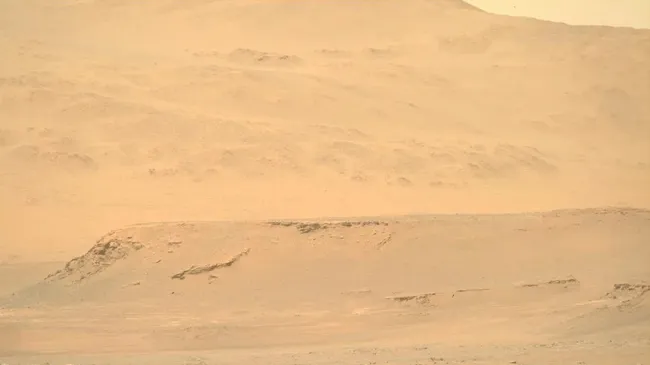
As reported Digital appearanceCurrently, Rover’s perseverance goes to the Doox Castle region, an area that may have been formed when the impact of the asteroid that formed the Jezero crater and has been material from the surface by the air.
As they looked at the Rover slowly climbing the slopes to the crater’s shore earlier this month, team members saw an unusual distance texture and decided to observe it through the Mastcam-Z camera.
A few days later, when the perseverance had already left the area, NASA received the data and realized the strange one that was the rock of about 20 centimeters. “Our knowledge of its chemical composition is limited, but the earliest interpretations are that igneous and/or metamorphic processes could have created their stripes,” said Athanasiios Klidarras, a member of the perseverance team and a doctoral student at the University of Purdue.
Although it is informally called “Zebra”, NASA’s team named it “Freya Castle”. The team believes that this rock probably reached its current position from other places, given the difference of the surrounding rocks, perhaps after shooting the slope.
According to the agency, as Rover increases the hill, it is expected that it will find more similar rocks in the coming weeks.