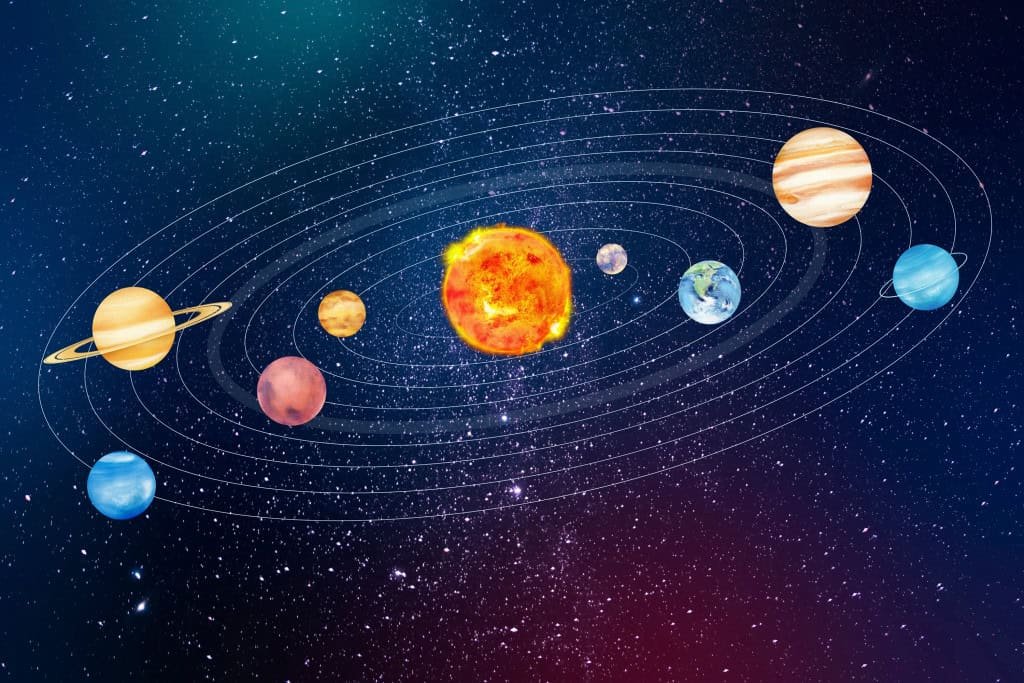
You mean you have been cheated all this time with the story that Earth and the other planets in the solar system revolve around the Sun? Calm, that does not mean that schools can badly teach.
In fact, this is a way of trying to facilitate understanding. The universe is a bit more complicated, and the physics that governs these movements is full of fascinating details.
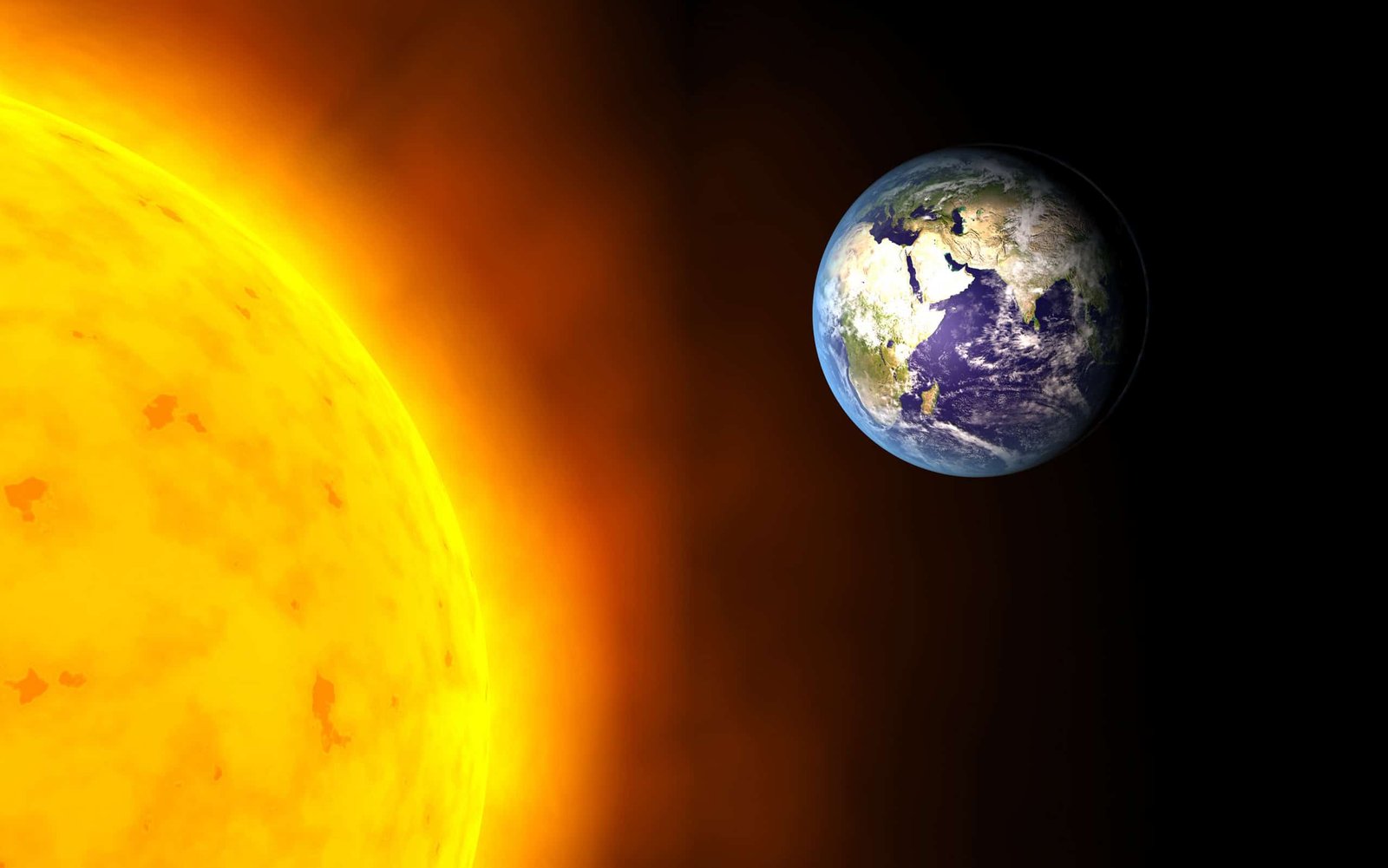
When you see diagrams or videos like this, showing the planets turning the sun, they are “simplifying” something that is called Baricenter. Baricenter is the equilibrium point of the system consisting of two objects that rotate one another. That is, the Earth does not exactly orbit the center of the Sun, because it also moves, though very subtly.
Consider the sun and earth as two individuals dancing together. They revolve around a point between them, which may be closer to one or the other. The sun is much larger and heavier, but the earth also exercises a force on it. This interaction causes them both to move through this balance point, Baricenter, which is shown in the video below:
According to NASA, the entire solar system works like this: the Sun, Earth and the other planets revolve around the system’s baricenter, which is the center of the mass of all bodies together. Therefore, the Sun is not located in the fixed center of the solar system, but “dances” as the planets are “thrown” in different directions.
The gaseous giant Jupiter plays an important role in this. It is 318 times more massive than the Earth, so its gravity throws the sun so that the baricentist between the two is out of the star’s surface. This means that, in many cases, the point around the sun is in space, not inside it.
Read -Ne More:
The moon also does not revolve around the Earth
In addition, the same phenomenon passes on Earth and the moon. The two do not rotate one for the other, but around a point that is about five thousand miles away from the center of the Earth. And this point changes as the moon moves slowly.

These details may seem small and even a little useless for those who are not scientific, but they are very interesting. They show that the universe is more complex and surprising than we think. What we have learned at school is an excellent basis for understanding planetary movements, but the real physics behind it is full of nuances.
In the end, our solar system is a true cosmic dance, full of complex steps that science slowly reveals, showing that learning never ends.