Love is in the air and space! While many couples celebrate valentine’s day with special flowers, chocolates and dinners, the universe also offers a passionate show. Some pictures show such poetic scenes that they seem true statements of cosmic love.
In Brazil, Valentine’s Day is celebrated on June 12, on the eve of Saint Anthony’s Day, known as the “Saint greed” by the Catholic tradition. The date was chosen in the late 1940’s for commercial reasons, to stimulate trade in June and was part of the affective calendar of Brazilians. In other countries, this celebration is February 14, Valentine’s Day.
Whether in June or February, no matter: the sky is still a perfect scenario for those who believe in love. Here are four examples that make the space a place as romantic as any Valentine’s Card.
Romantic images of the universe
Read -Ne More:
Ram of the stars
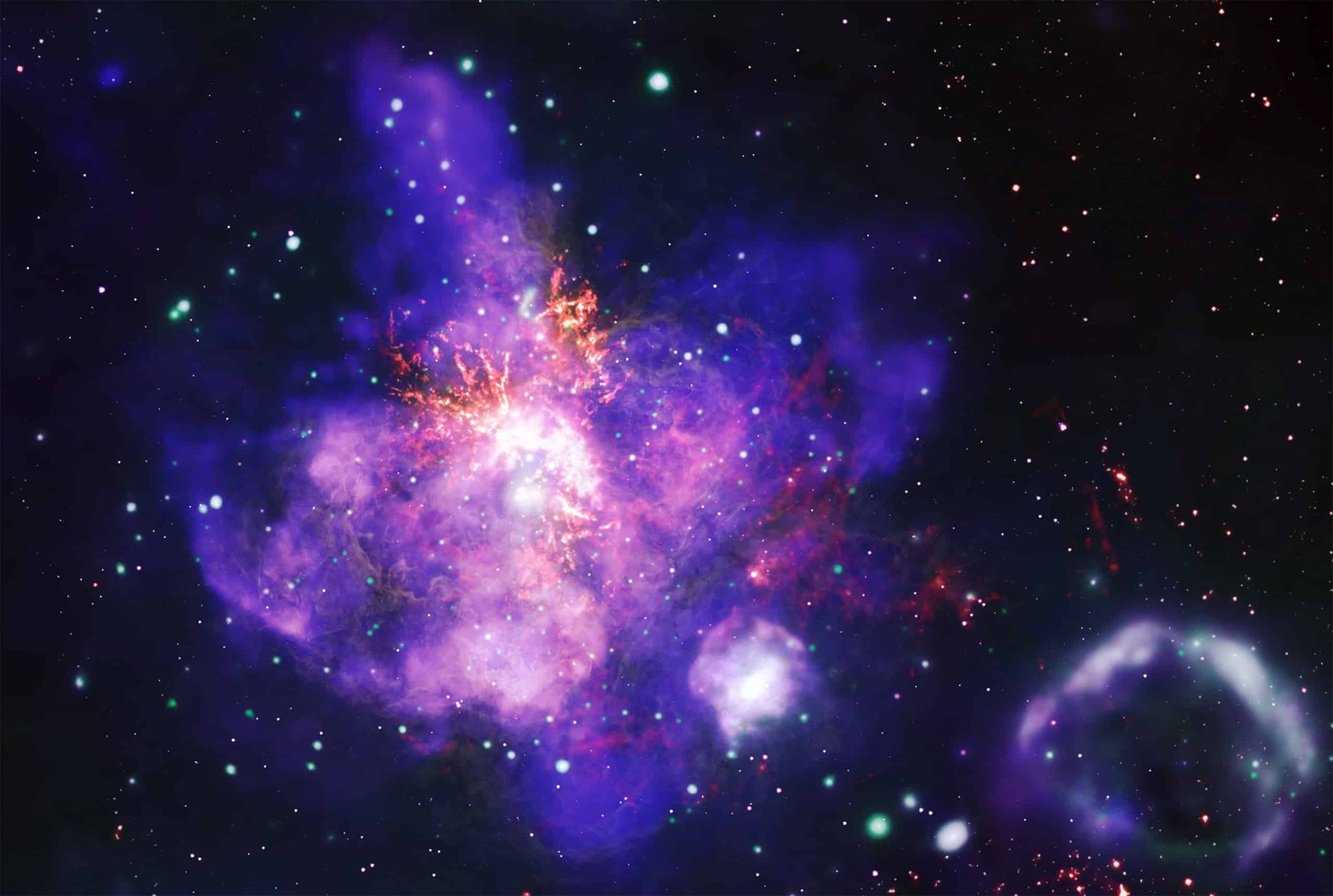
Imagine -you give the beloved one with a bouquet of thousands of stars. This is the impression that region 30 Doradus, also called the Tarantula Nebula, offers the eyes and imagination.
This area is about 160,000 light years from the Earth, in a satellite galaxy of the Milky Way, the great cloud of Magalhès. It is one of the most active places in the galaxy regarding the birth of the stars.
The image that shows this beauty is the result of the combination of three technologies: X rays of the Chandra telescope (in blue and green), visible light of Hubble (in yellow) and Radio Observatory waves in Chile (in orange).
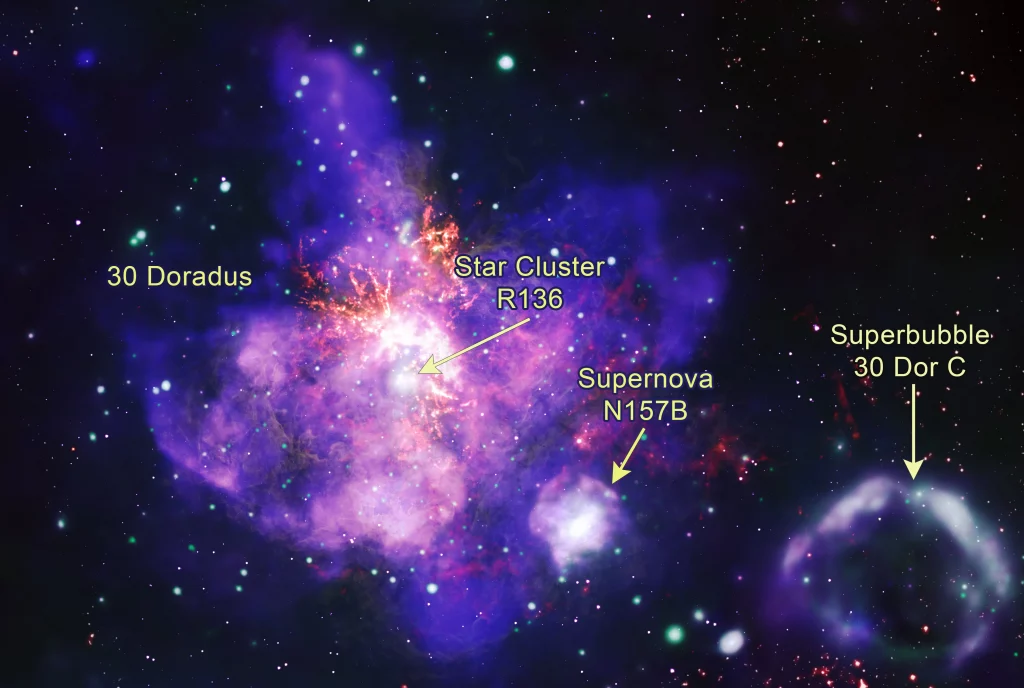
What you see is a real star garden, full of bright young stars, gas pillars and arches cut by cosmic winds. It is the type of place in the universe that seems to have been made for lovers of heaven.
The center of this bouquet houses the largest stars that have ever discovered, with only a few millions of years, much younger than the Sun, which is about 5 billion years old. It throws the winds so strong that they make up the gas around, creating beautiful shapes.
This set of stars has energy to form new stars for at least 25 million years. That is, it is a love that will still last long.
Bright triple ring
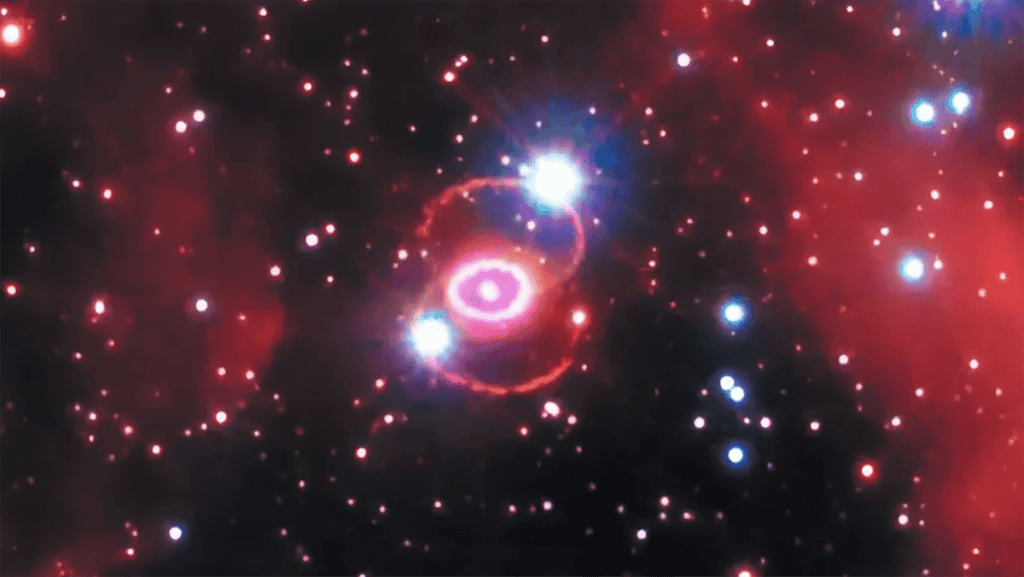
If you have thought of an alliance of commitment, you know that the universe also has a “brilliant ring”. In fact, three bright rings around an old star explosion called supernova 1987a.
This supernova was the closest and most bright recorded in the last 400 years. It took place in the same galaxy as the Tarantula nebula and was first seen in 1987, bright as 100 million sun.
Around it, three mysterious gas rings were formed, which look like floating jewelry in space. The most accepted explanation is that these rings arose when two stars merged before the final explosion. Get more information about this supernova here.
Pearl necklace
Another romantic gem in the sky is the nebula of the necklace (Iras 19417+1701), located about 15,000 light years from the Earth, in the constellation of Sagitta (the arrow). Its name is no coincidence: it even resembles a plastered collar with bright pearls.
This cosmic formation also arose after the two -star collision. The impact generated a cloud of gas expansion, with brighter regions, as if they were precious stones.
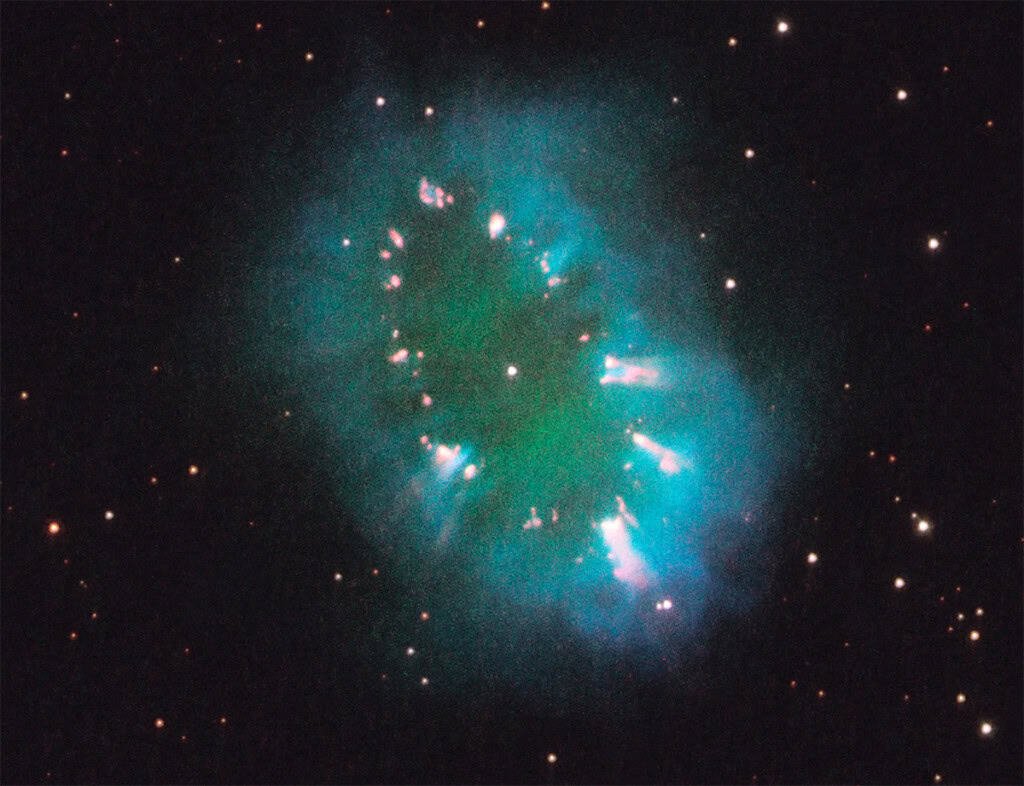
The image was captured in July 2011 by the Hubble Space Telescope, which revealed the details of this galactic necklace. It is as if the universe has prepared a jewelry specially designed to give the loved one. And the best: with eternal shine.
Hearts of the universe
If the maximum symbol of love is the heart, the cosmos also has yours. One of the best known is in Pluto, where a region of this format was closely photographed by the New Horizons of NASA in 2015.
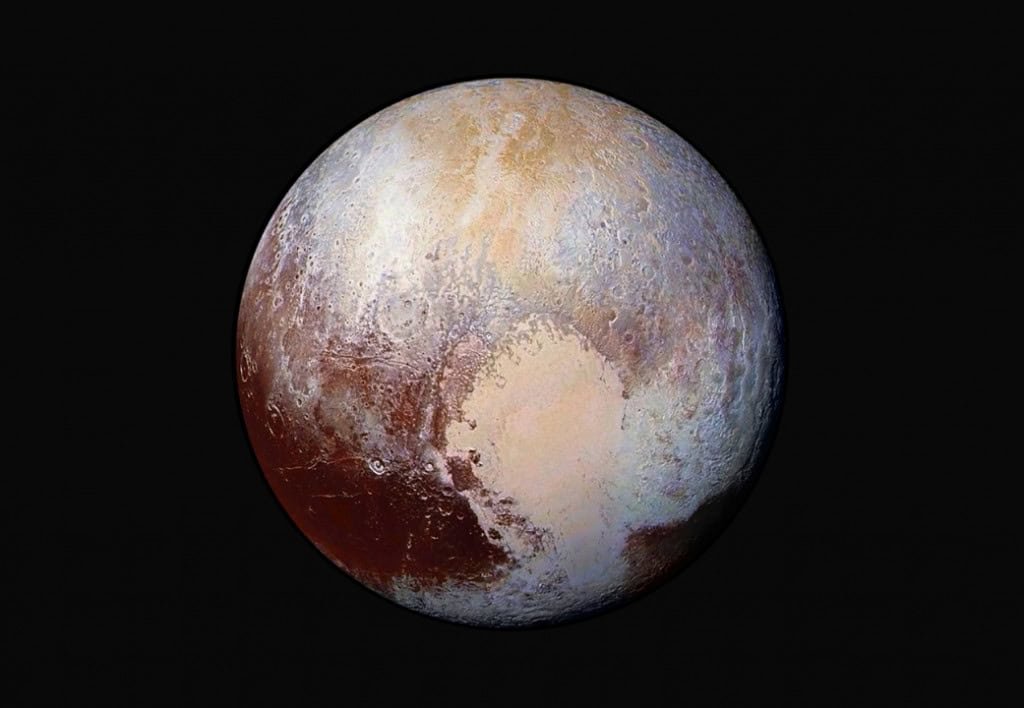
Called Tombaugh Regio, the area is about a thousand kilometers wide and is made of ice. Since its discovery, it has become a symbol of affection among astronomy fans.
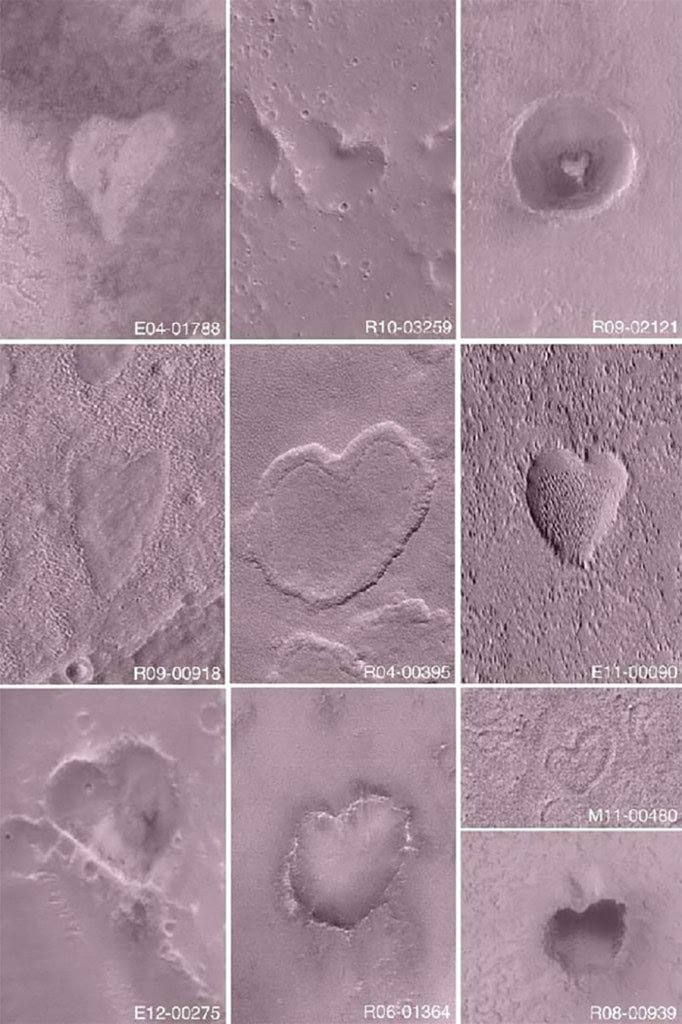
But the dwarf planet is not the only one. Mars has natural formations: plateaus or craters, which, seen from above, have a heart form. They were recorded by the NASA Global Surveyor’s probe.
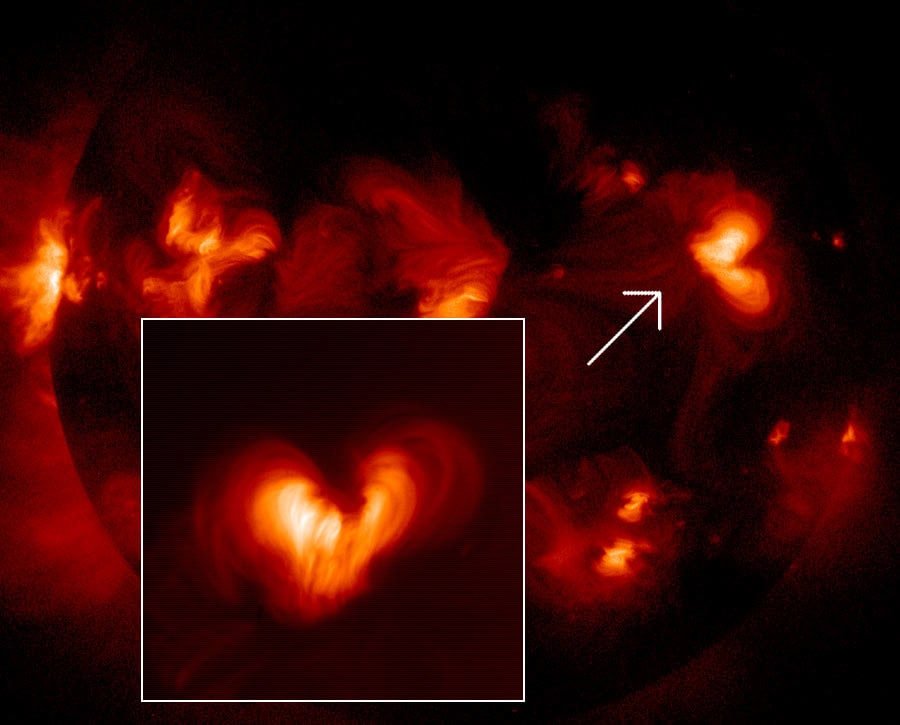
Even the sun, when it is observed with X -ray equipment, has already shown a brand new heart. The image below was made by the North -American Japanese telescope and reveals a gas arch of eight million degrees Celsius.
And finally, an image that is not space, but was obtained. A small island called Galešnjak in Croatia became famous after satellite images revealed their heart shape. Result: Even with only 130,000 square meters, it has a huge symbolic attraction.

If the stars can form bouquets, supernovae can create alliances and fogs can turn into jewelry, perhaps love is a universal force, as powerful as gravity. Happy Valentine’s Day! And don’t forget to look at the sky.