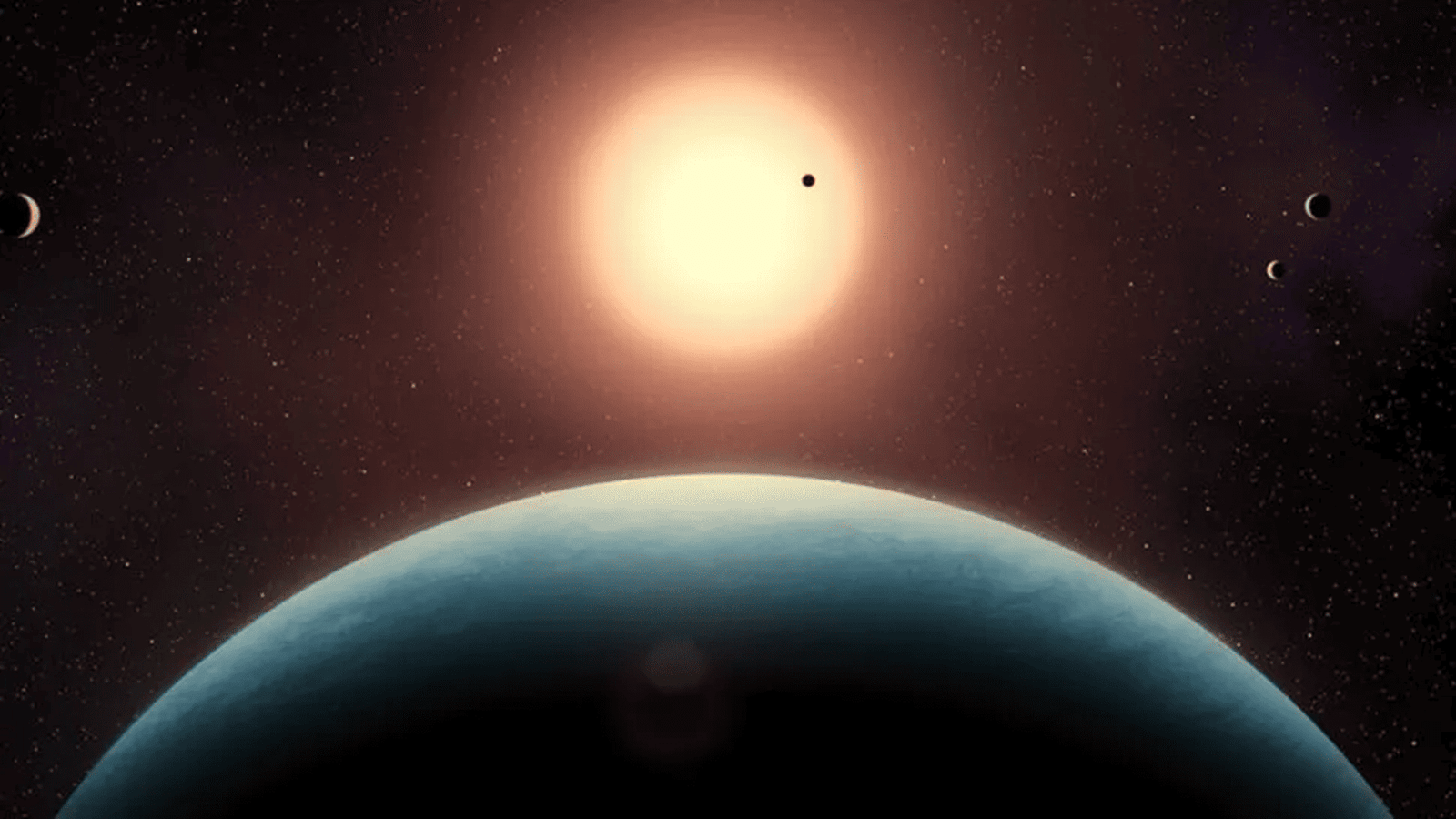
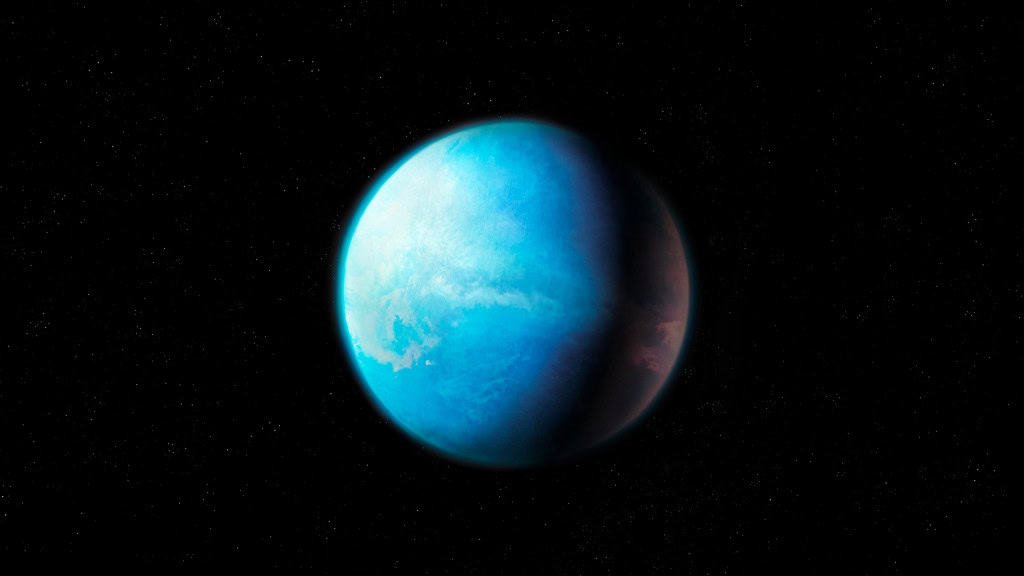
Astronomers discovered an exoplanet around 35 light years of us who qualified as “Super-terra“We understand this category in the next lines. And there is something very interesting: it is within the habitable area of your star. This means that it can Ideal conditions exist liquid water And, who knows, life.
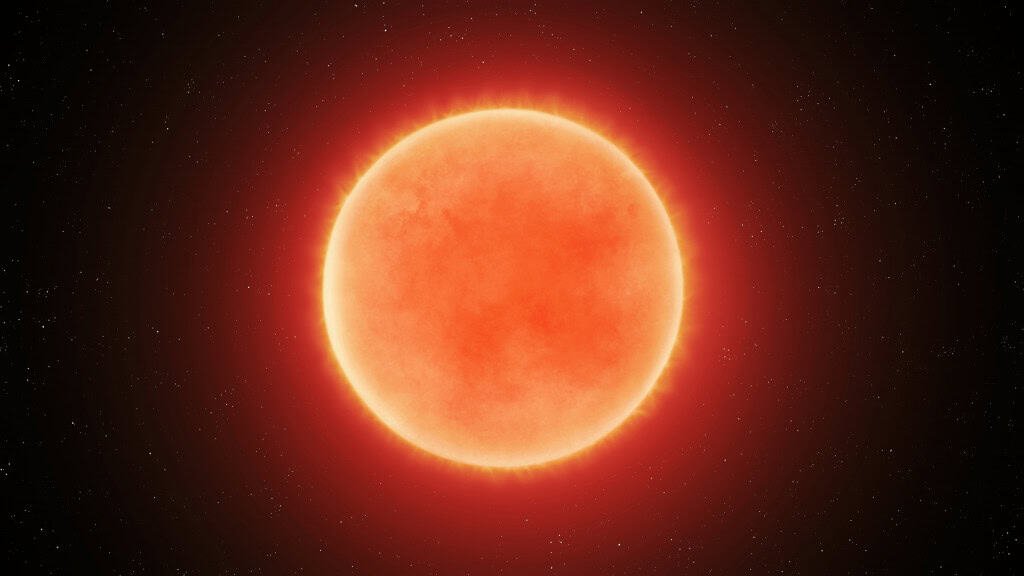
The planet in question is the L 98-59 fThe fifth found orbiting the red dwarf star L 98-59. She is Cold and weak and the celestial bodies that the orbit has Small, rocky planetshow he details the Space.com.
- Ol 98-59 f is a supermarket with a dear mass of at least 2.8 times the one on our planet;
- Its orbit is Almost perfectly circular And hard 23 days of land around his star;
- Burst Almost the same amount of the stellar energy that the Earth;
- In this way, it is there habitable area of the star, in a range of distances where liquid water could exist If the atmosphere gives ideal conditions for this, according to a statement.
- Superters-a class of planets unlike any other in our solar system, are more massive than Earth, but lighter than ice giants like Neptune and Uranus, and can be made of gas, rock or a combination of both. They are between double the size of the Earth and up to 10 times its mass.
- Superter is a reference only to the size of an exoplanet larger than Earth and smaller than Neptune, but does not suggest that they are necessarily similar to our native planet. The true nature of these worlds is still involved in uncertainties, since we have nothing like them in our own solar system, and yet they are common among the planets that are so far in our galaxy.
As the discovery happened
Astronomers involved in the finding come from the Trottier Institute for Exoplanet Research at the University of Mont -Real (Canada). They detected the new supermarket through data from high precision spectrographs Radial Speed Planet (Harps) and Echelle spectrographs for stable spectroscopic observations (EspressCoscopo) of the Rocky spectroscopic (ESO) and observations of the transitional exoplanet survey (TESS) of the NASA.
As an exoplanet discovered failure In the face of their star from our perspective, the way researchers found it from the Tracking small changes caused to l 98-59 for gravitational attraction from L 98-59 f.
Determination of the size, mass and key properties of the five exoplanets were determined from the Combination of data Of Harps, Espresso and Tess, as well as those provided by the James Webb Space Telescope (JWST).
It is also used Advanced techniques To filter the -call “soundStarry noise“. This data junction was crucial To get the best picture of the L 98-59 system to this day.
“Finding an experienced planet in such a compact system makes this discovery especially exciting,” said Cadieux. “It emphasizes the remarkable diversity of exoplanetary systems and reinforces the need to study potentially habitable worlds around low mass stars,” says Charles Cadieux, the University’s postdoctoral researcher and the main author of the study.
“These new results paint The most complete picture that we already had of the fascinating system l 98-59. It is a powerful demonstration of what we can achieve by combining data on space telescopes and high precision instruments on Earth and gives us key objectives for future atmospheric studies with James Webb Space Telescope, “he continues.
The fact that the studied system is near and that the star is small, easy In atmospheric monitoring studies. This means that if the 98-59 f has atmosphere, telescopes, such as JWST itself, can identify the presence of water vapor, carbon dioxide or bioassin – The potential indicators of life.
Read -Ne More:

Other discovered worlds
The same study, published this month in Earth and planataric astrophysicsHe also found that the innermost planet of this system, L 98-59 B, has 84% the size of the land and Half of your massthat “grants it” as one of the smallest exoplanets measured.
At her Tide forces they can increase volcanic activity On the two most internal planets of the L 98-59 system. Already Low density of the third planet indicates that there is water abundancecontrasting with the planets of our solar system.
Researchers say that this plurality of scenarios and conditions helps them to research the training and evolution of planetary systems beyond ours.