

In September 1999, a calculation error led to the destruction of a NASA space probe a few moments before entering the orbit of Mars. Failure was not due to obsolete technology or mechanical fall, but to a simple and incredible problem: the involved team used systems of different units (the metric system and the imperial system) without proper conversion between them.
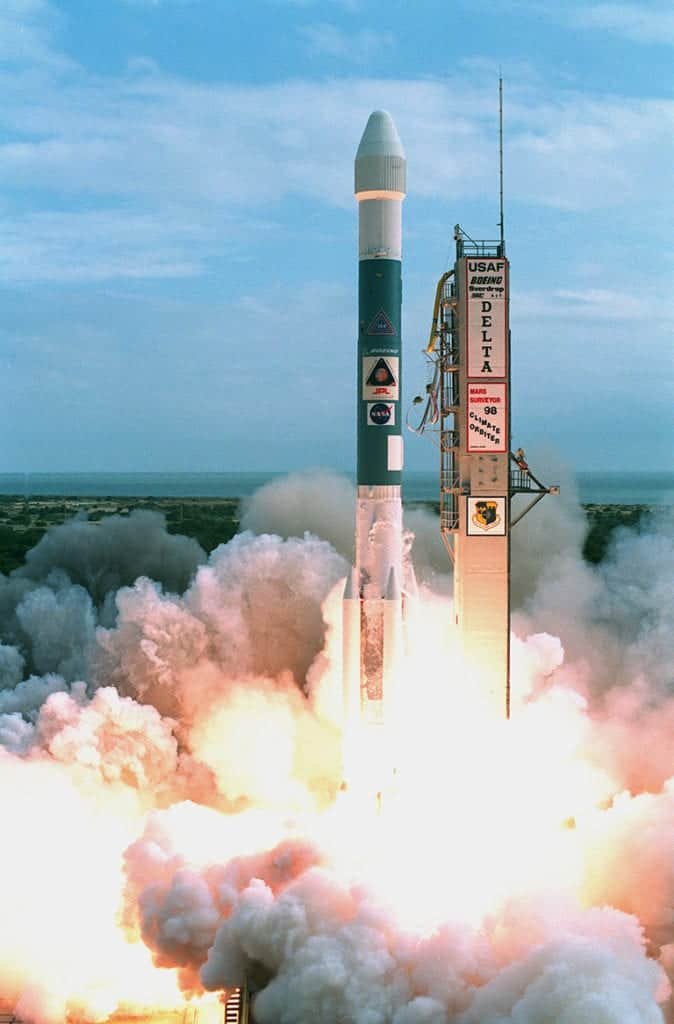
The Space Ship of Mars Climate Orbiter was launched in December 1998 with the mission of studying the climate and atmosphere of Mars. The spacecraft would also serve as a signal repeater for another NASA mission, Polar Lander seas (Polar Patusador Mars).
According to a story published by Folha de S. Paulo at the time of the events, about $ 125 million was invested in the development and launch of the orbit, which weighed 638 kg and which had been developed by Lockheed Martin in collaboration with the NASA Jet (JPL) propulsion laboratory.
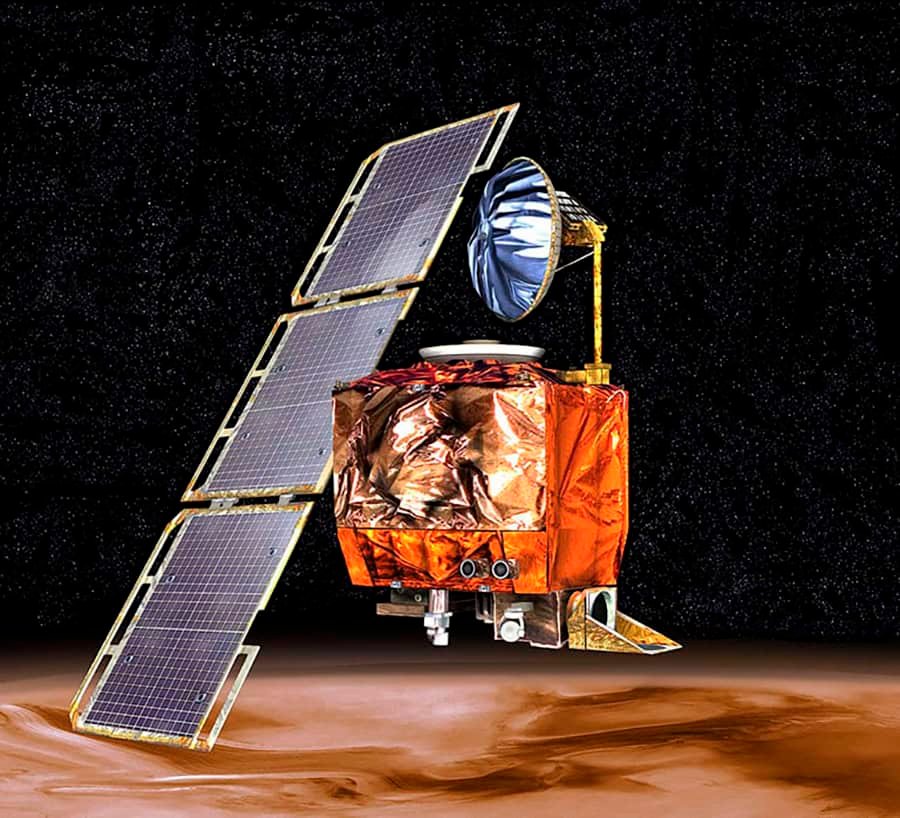
The origin of the problem was a communication error between the two technical teams. While JPL used the standard metric system throughout the scientific world, Lockheed Martin provided data in units of the most common imperial system in the United States. Instead of converting the measures, NASA engineers assumed that the data was already in meters and newtons. Result: Navigation calculations were incorrect.
Why are there different measurement systems in the world?
In practice, the error caused the probe to approach the Martian atmosphere. Instead of orbiting, it ended up being destroyed by the heat generated by the friction with the thin layer of gas on the planet. NASA, who was hoping to hold another achievement, lost a mission due to a detail that could have been avoided.
This episode warns the importance of standardization in units of measurement. But after all, why are there different measurement systems in the world? And how can it cause such serious confusion?
Throughout history, each people have developed their own ways to measure time, weight, distance and other everyday parameters. For example, some civilizations were based on the movement of the Sun or the Moon to mark time. As communications were limited, measurement systems evolved independently in different regions of the world.
With the advancement of science and international trade, it was clear that a unique and standardized system had to be created. According to the engineering simulation platform YamcaleIt was in France, during the French Revolution, the first major attempted standardization arose: the metric system. In 1795, official metro and kilogram standards were created, stored in the archives of the Republic in Paris.
The German mathematician Carl Friedrich Gauss was one of the first to use the metric science system. British scientists James Clerk Maxwell and JJ Thomson later contributed to the development of an even more complete system, known as CGS (centimeter, grass and second).
US: Cultural and Economic Resistance
Over time, this system has evolved into the international unity system (SI), currently used worldwide. In 1889, the General Conference of Pesos and Measurement officially made the counter and kilogram as standard units. After that, other units, such as the second (time), the ampere (electric current), the kelvin (temperature), the candle (brightness) and the mol (amount of matter) were added.
Today, if it is composed of seven basic units and it serves as a global reference. However, some countries still reluctantly adopt it. The United States, for example, still uses the imperial system in many areas, such as construction, trade and, as we have seen, even in space sectors. There, the distance is measured in inches, feet and miles. And the weight is calculated in pounds, not in pounds.
One foot is 12 inches, a patio is 3 feet and a mile is 1,609 meters. Already in the metric system, everything is based on multiples of 10, which facilitates the calculations: 1 meter is 100 centimeters, 1 kilometer is 1,000 meters.
Due to cultural and economic resistance to change, the United States adopted an intermediate solution. In 1975, the country passed the “metric conversion law”, which defined whether as the favorite system, but without prohibiting the use of the imperial system. Some transitional attempts were made in the 1980’s, such as two -car -scale two -car and kilometer miles), but there was no great adherence.
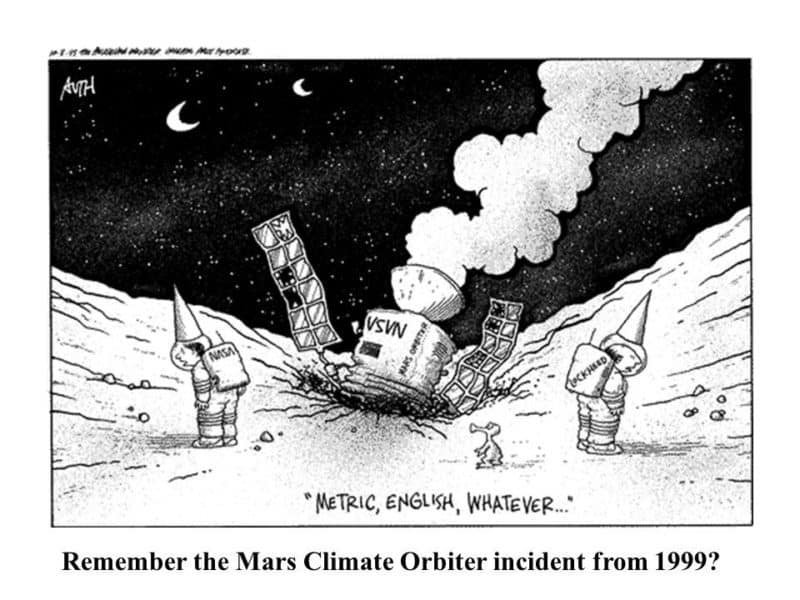
It can be said that the tragedy of Mars Climate Orbiter was a turning point. After an investigation, NASA concluded that the software responsible for calculating the thrust of the Hélices used Libras-Force, but the system that interpreted the planned data. Since a libra force equals about 4.45 Newtons, the error pledged the entire trajectory of the spacecraft.
The report of the Review Board indicated several defects. The most serious was the absence of unit check used in an essential component. In addition, the system engineering team, which should ensure that all the elements of the project were integrated properly, did not identify the problem in time. The exchange of responsibility between Lockheed Martin and NASA also contributed to the disaster.
Read -Ne More:
This was not an isolated case. Another known episode is Gimli Glider, an Air Canada plane, which in 1983 was out of fuel during the flight due to a conversion error. Canada passed to the metric system and the supply equipment calculated the amount of pound -based fuel instead of kilograms. As a result, the aircraft received half the fuel required.
Conversion of units also affects the daily life of ordinary people. Someone accustomed to pounds can be confused when seeing food sold by pound in the United States. A simple interpretation error can cause financial losses or even health risks in cases involving medicines, for example.
The episode of Mars’s orbit showed that even advanced institutions such as NASA are not free of basic failures. Standardization and attention to detail are crucial, especially in complex and interdisciplinary projects. The universal adoption of the metric system could avoid these errors in the future.
Today, even in the United States, there is a growing movement in favor of the international unitary system, especially in technical, scientific and international areas. Large world companies are already operating with the metric system to facilitate exports, contracts and cooperation with other countries. Cultural change is slow, but each error serves as a reinforcement for the importance of standardization.