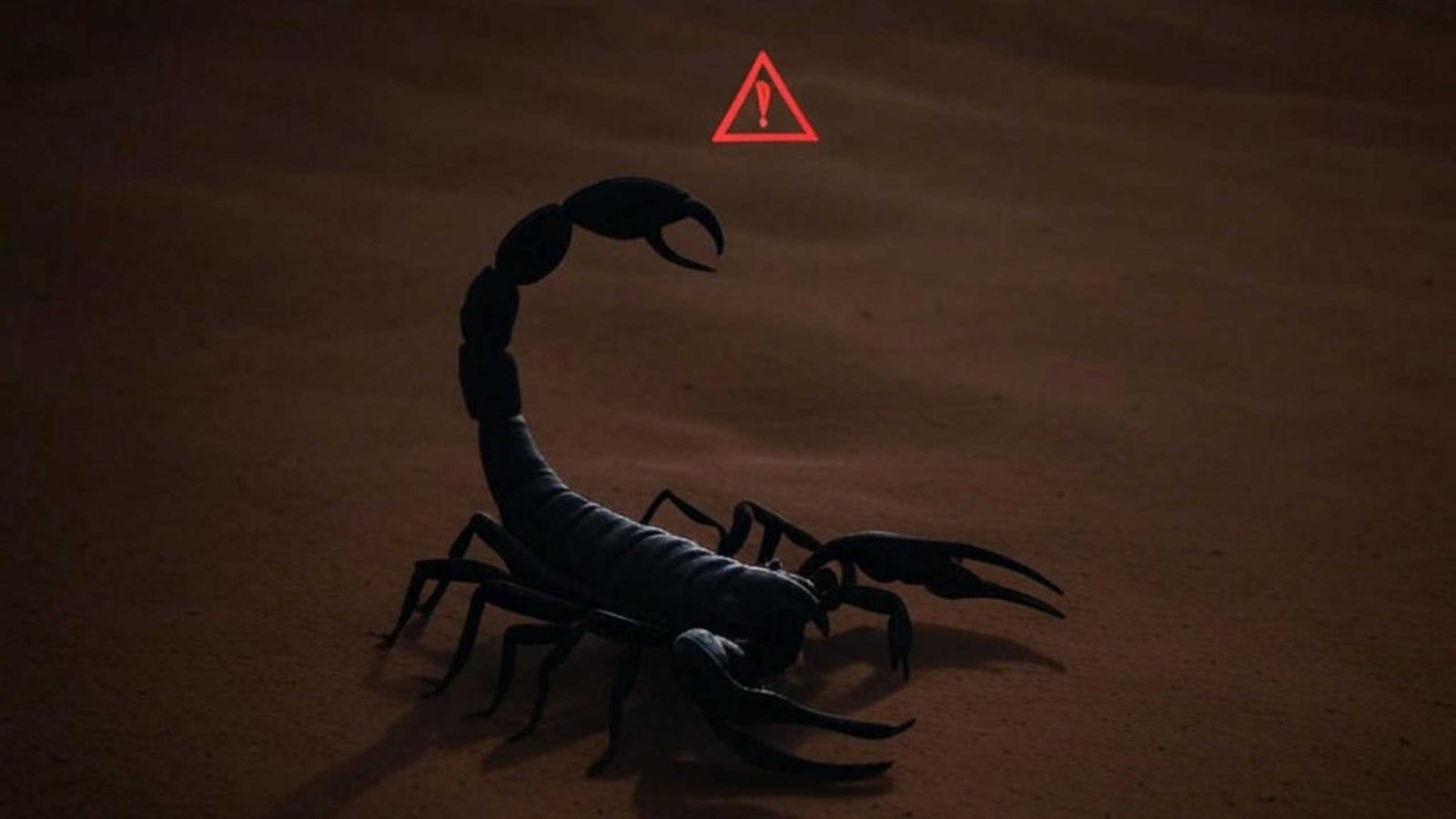
Scorpions are poisonous animals that use their bite to inject toxins into their prey or possible threats. Although most species do not have a significant danger to humans, some have powerful pens that can cause severe and even mortal effects.
Then we present a list of the ten most dangerous scorpions in the world, detailing their characteristics, habitats and effects of their poisons on the human body.
The 10 most dangerous scorpions in the world
The scorpion that fires the poison at a distance: Parabuthus transvaalicus (Scorpion-Grosso in season)
The Scorpion-Grosso-In-FRIC is one of the largest scorpions, 12 and 14 cm. Its neurotoxic vessel can cause intense pain, paralysis and, in severe cases, respiratory failure.

In addition, it has the ability to heat the poison at a distance of up to a meter, directing to the eyes of possible threats. This scorpion is located in South Africa, especially in South -Africa, which inhabits the arid and semi -arid regions, such as savannas and deserts.
Its color varies from black to dark brown, with a robust body and a thick tail. Its danger stands out Scorpion filesfrom the Norwegian University of Science and Technology (Files of the University of Science and Technology of Norway of the University of Science and Technology)).
High Toxicity Amazon Scorpion: Tityus obscurus
This scorpion is found in the Amazon region, including Brazil, Peru and Colombia, which inhabit wet tropical forests, where it is often found under the bark and foliage of trees. Its color is dark brown in the black, with an elongated body and thin tweezers.

With a length of 6 to 7 cm, your neurotoxic poison can cause intense pain, seizures, heart arrhythmias and, in severe cases, dead.
This species stands out as one of the most dangerous for public health, according to the Outantan Institute. Get more information.
The North Urban Scorpion -East Brazil: Tityus Stigmurus
This scorpion is present in the north -east of Brazil, which inhabits urban and rural areas, often hidden in remains and houses. Its color is yellowish, with a dark pattern on the back.

This species measures 5 to 7 cm and its neurotoxic poison can cause intense pain, excessive sweat, vomiting and neurological disorders.
This species is also one of the most dangerous for public health, according to the Outantan Institute. Get more information.
Fatal necrosis scorpion: Hemiscorpius lepturus
With a length of 6 to 8 cm, this species stands out for its cytotoxic peak, which causes severe necrosis in tissues, hemolysis and even organic failure.

Its poison is highly cytotoxic, causing severe injuries, inflammation and necrosis, similar to the lesions caused by the spider’s bite. No Antivene available.
This scorpion is present in Iran and other regions of the Middle East, which inhabit arid and semi -arid areas, often invading human housing.
In Iran, although only 12% of the registered bites accounts for 95% of the deaths and can lead to renal failure, deep ulcers, psychological problems and even death.
Its color varies from yellowish to light brown and differs from other scorpions because it does not have the typical voluminous caudal segment.
His danger also has prominence in the Scorpion filesfrom the Norwegian University of Science and Technology.
The Desert Killer: Black Scorpion (Androctonus crassicauda)
This robust scorpion, black and aggressive behavior, measures between 10 and 12 cm and is found in the Middle East and North Africa, in countries such as Iran, Türkiye and Saudi Arabia.

Its poison is highly toxic and can cause intense pain, seizures, paralysis and, in severe cases, cause death.
For arid deserts and regions, it represents a constant threat to those who live or work in these regions. Its danger is highlighted at the United States National Library of Medicine, which reports that the population will take care of this species. Read more here.
Read -Ne More:
The most poisonous in the US: CLICK (CENTRUROIDS sculptuatus) scorpi
This scorpion measures 5 to 7 cm and is found in the United States (Arizona, California, Nevada, New Mexico) and northern Mexico.

Its color varies between yellow and light brown and its body is slender. Its neurotoxic poison can cause intense pain, numbness, difficulty breathing and, in rare cases, death, especially in children and the elderly.
It is considered the most poisonous scorpion in North America and stands out in the National Library of Medicine of the United States.
The Southern Matador: Scorpion-de-Gret-Yellow (Andoctonus australis)
This scorpion, located in North Africa and the Middle East, measures 10 to 12 cm and has a yellow color and a thick, robust tail. Your neurotoxic poison can cause paralysis, respiratory failure and death.

Because it is highly resistant and capable of surviving in extreme conditions, it is one of the most feared scorpions in the world. Its danger stands out Scorpion filesfrom the Norwegian University of Science and Technology (Files of the University of Science and Technology of Norway of the University of Science and Technology)).
The most lethal in India: Red Scorpion (Hottetota Tamulus)
This scorpion, found in India, Nepal, Sri Lanka and Pakistan, measures between 6 and 7 cm and has a color that varies from reddish brown to orange.

Your poison is highly toxic and can cause intense pain, vomiting, sweating, seizures and, in severe cases, pulmonary edema, causing death in 24 hours without treatment. It is often found in urban and rural areas, it is a great risk to barefoot children.
It Scorpion filesFrom the Norwegian University of Science and Technology, it is one of the most dangerous species in the world.
The most dangerous in Brazil: yellow-brasile scorpion (Tityus serulatus)
With the size of 6 to 7 cm, this is the most dangerous scorpion in Latin America and the main responsible for accidents in Brazil, especially in the south -west regions.

Its neurotoxic poison can cause intense pain, nausea, vomiting, tachycardia and, in severe cases, edema and pulmonary shock, being especially dangerous for children and the elderly.
Light yellow, is easily recognized by the absence of a granite in the tail. He lives in urban and rural areas, is often found in damp remains and places.
The Outantan Institute warns the need for precaution with this species. Get more information.
The Hunter of Death: Yellow-Palestin
With the nickname “Deathstalker”, Leurus Quinquestriatus, is the most dangerous scorpion in the world for the book Guinness. This scorpion measures 8 to 11 cm and is located in North Africa and the Middle East, including Egypt, Israel and Saudi Arabia.

Its color and its pale yellow color make it fear, but the real danger is in its poison, a mixture of neurotoxins and cardiotoxins that can cause intense pain, fever, seizures and, in severe cases, coma or death. It lives mainly deserts and semiarid regions.