A mystery that intrigues science for years can have been finally revealed. Authors of a study published in Journal Science Planatària They investigated the presence of hydrogen peroxide (H2O2) in Europe, one of the many moons of Jupiter, with the aim of relating their increase in CO2 levels in the satellite.
Understand:
- A mystery about high levels of hydrogen peroxide (H2O2) in Europe, the Jupiter moon, seems to have been revealed;
- It was previously believed that the coolest places in Europe would have higher concentrations of H2O2;
- In fact, the warmest regions of the Moon have the largest amounts of peroxide;
- Researchers found that this is related to CO2, which, even at lower levels, can greatly increase H2O2 concentration.
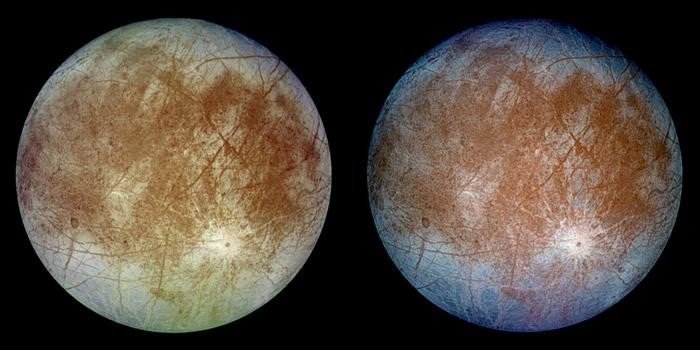
Previous studies said that hydrogen peroxide levels, also known as hydrogen peroxide, would be higher in the coldest regions in Europe. However, the analyzes of the James Webb space telescope have unexpectedly revealed that the highest rallies are in the hottest places on the Moon.
Read -Ne More:
Mystery H2O2 to the moon of Jupiter Intriguat Scientific
As H2O2’s largest regions also had higher CO2 levels, researchers were asked about a possible relationship between the two substances and left the investigation.
“CO2 could the presence of an increase in the production of peroxides in the chaotic earth of Europe, which indicates a surface composition more conducive to the formation of this radiolithic oxidant?” Write the team.
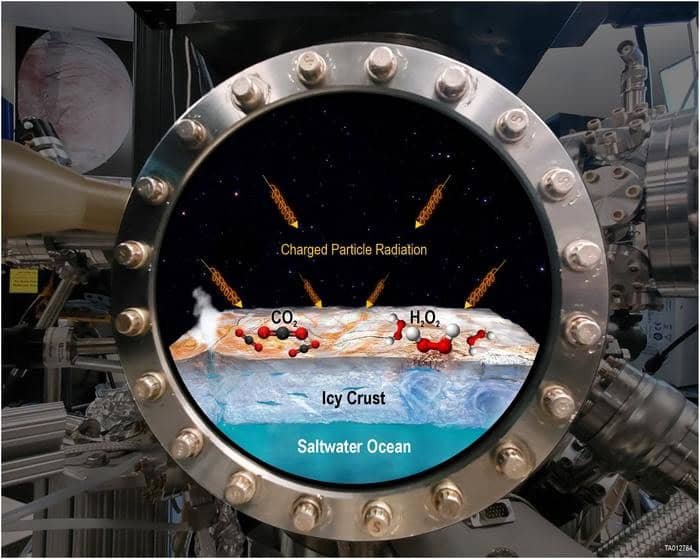
The earliest experiments corroborate the hypothesis, but in order to have the definitive response, researchers simulate the environment of the Jupiter moon surface in a vacuum chamber. In it, they deposited “water gel deposited with different amounts of CO2”.
The study demonstrates the relationship between CO2 and H2O2
The team then radiated the ice mix with energy electrons “to observe how the peroxide production changed,” said Beretk Mamo, one of the team’s scientists, in a statement.
The experiment has shown that at temperatures such as the surface of Europe, even the smallest amounts of CO2 can lead to a very high increase in H2O2 levels, capturing electrons produced by radiation and preventing the breakage of peroxides in later reactions.
The team states that the results can help understand the existence of hydrogen peroxide in other cold bodies, such as the Pluto moon, caronte.