Everyone had a favorite toy in childhood, be it a stuffed teddy, a ball or something electronic. And what is left now is the affective memories.
Yes, we become adults and are full of responsibility, but who would not go back to live these good times? It was from this premise that a group of MIT scientists, the University of Science and Technology University of Hong Kong and Eth Zurich developed a tool called Intecon.
Read -Ne more
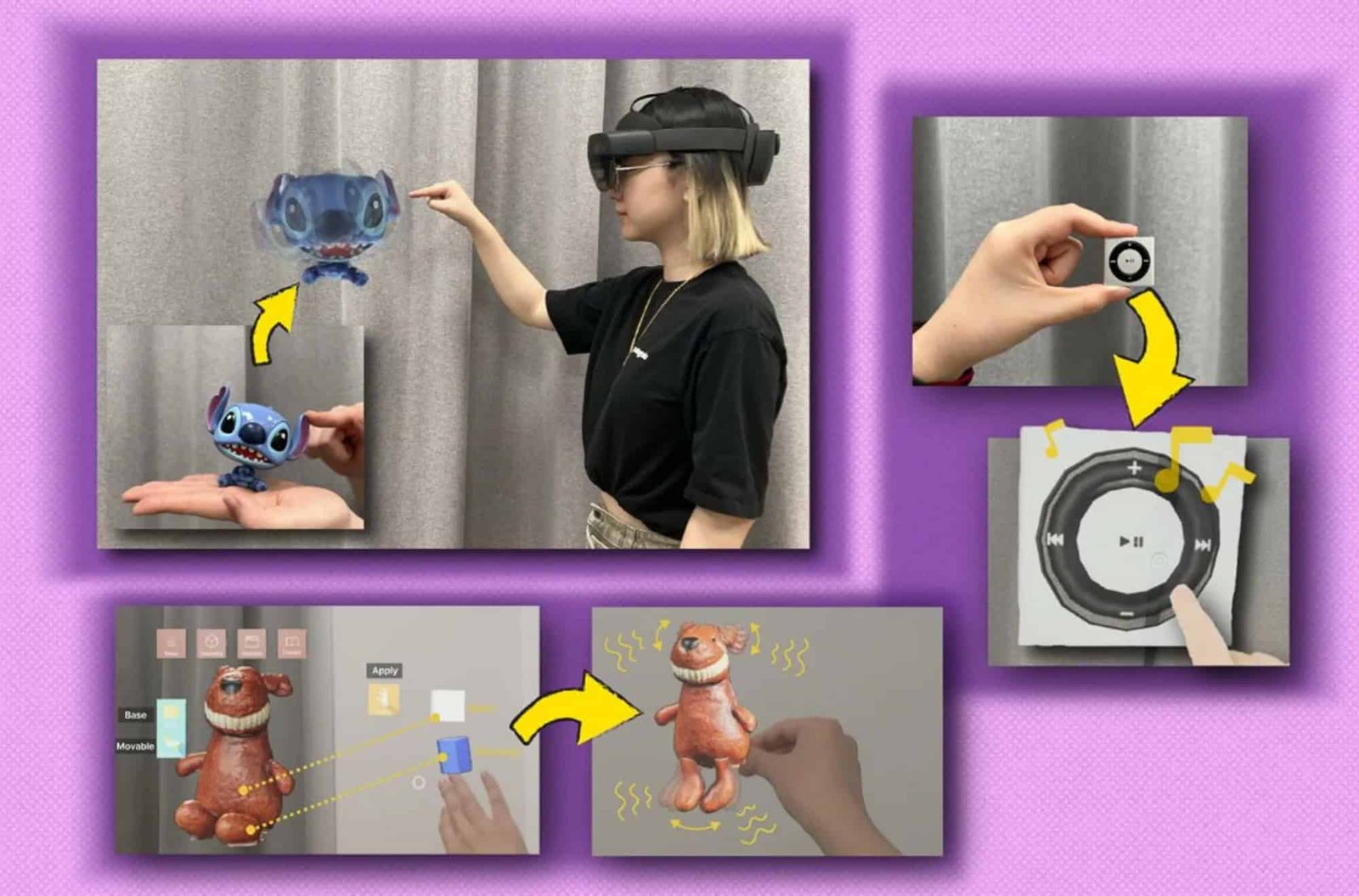
No, they did not invent any time machine. Using mixed reality technology and 3D exploration, they have been able to recreate several old toys in the virtual environment.
The most impressive is that researchers replicated not only the format, but also the functions of objects. This is true for a rabbit who moved his ears and even his good and iPod Shuffle.
How is this possible?
- Interecon is an abbreviation for interactive reconstruction, and this is precisely what the project proposes.
- It takes 4 steps to achieve the end result:
1) rebuild the appearance of the object from 3D scan;
2) Add physical transformations, such as the ears of the rabbit that move;
3) rebuild the interface of objects with buttons and controls that act actually mixed;
4) Add built -in content, such as videos and songs that were part of the original object.
- In topic 2, researchers seized the 3D object in different parts, specifying the operation of each of the demonstrative tools.
- The work is extremely complex, but it is possible, as shown in the following video:
- Scientists have used affordable tools, such as an iPhone app for exploration and a headset PEST for mixed reality programming.
- You can read the full search at this link
Following steps
The researchers also showed that it is possible to replicate a television set that reproduces a selection of predefined cartoons. Or even a rudimentary appearance game that only manages a few games.
The next step of research is to further perfect these digital creations, which becomes perfect copies of their peers in real life.
Scientists also think of other applications, as well as digitizing toys. An idea would be to use the world tool of FashionWith designers working in clothes in this 3D universe.
Another suggestion is to help medical students train in defiant surgeries. This, however, should still take time. Interecon needs to evolve a lot, especially its accuracy and mechanisms of physical simulation.
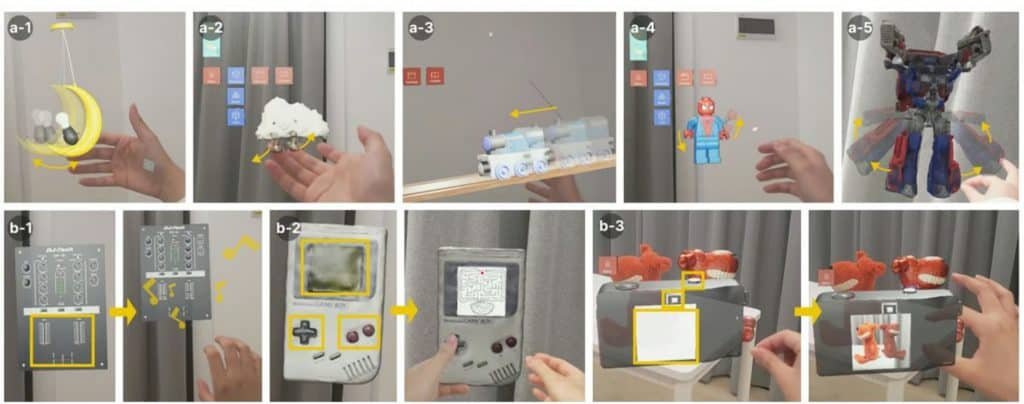
Even in the current stage, the project is already very encouraged by the scientific community. The team will officially submit their work to Conference where Human Factors in Computing Systems, which takes place at the end of the month in Yokohama, Japan.
The information comes from New Atlas.