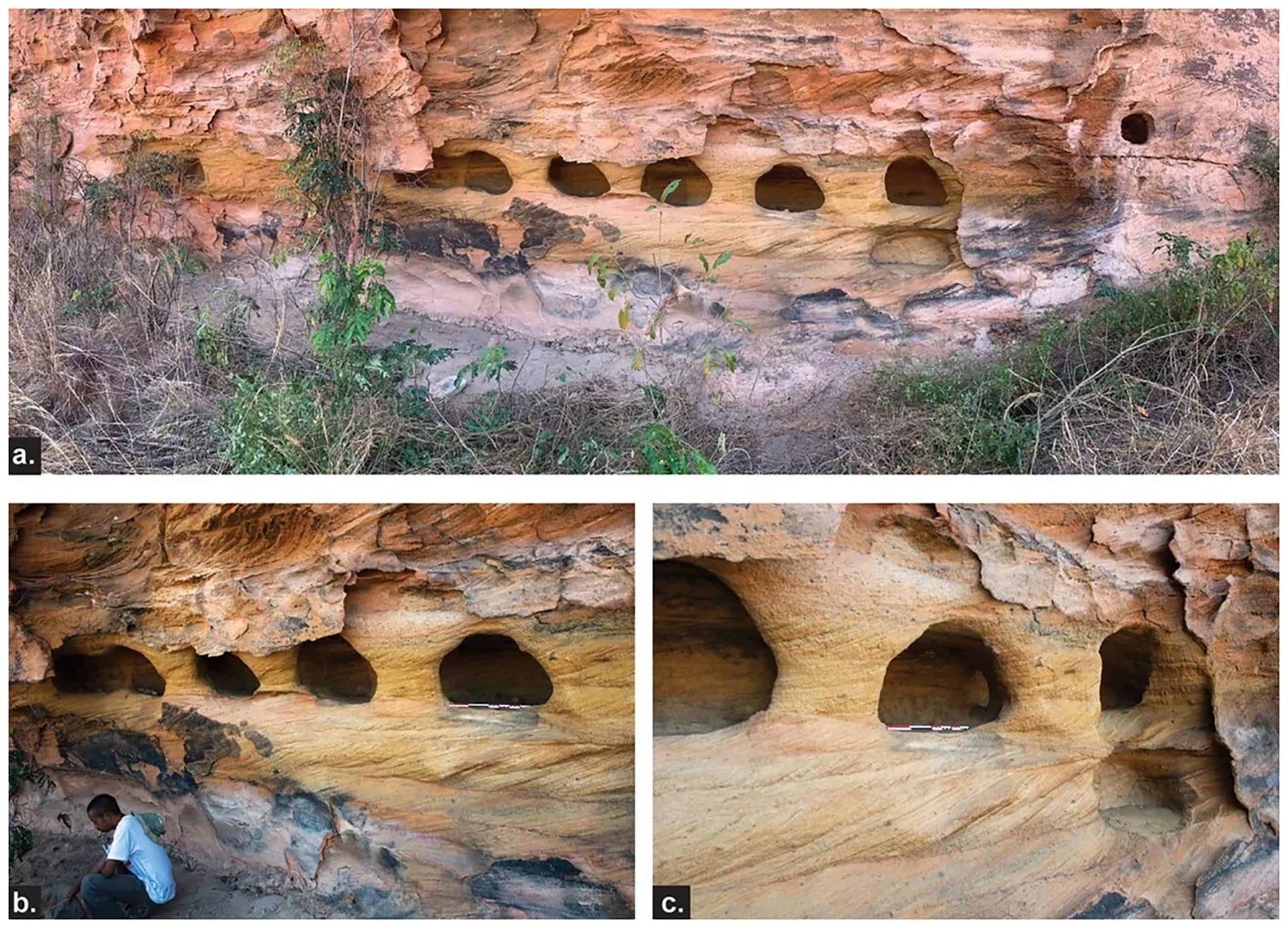
In the south of Madagascar, about a thousand years ago, a mysterious group of people built impressive chambers and cavities on the rock of a Penya -sgat. These structures, located in a place called Teniky, in Isalo National Park, have intrigued archeologists for decades.
The single architecture found that there is no precedent in Madagascar or the coastal regions of East Africa. The identity of these builders and the moment they arrived on the island are still an enigma that researchers try to reveal.
A study recently published in the magazine Azania Suggests that these people could have been a Zoroastrian community living in the country for about a thousand years. The remote town of the rock terraces, about 20 kilometers in injured terrain, made it difficult to carry out archeological research over time.
In a statement, Professor Guido Schreurs, author of the study, says that beyond the access difficulties, research in Madagascar requires collaboration with local institutions and authorizations from different ministries, which represents another challenge.
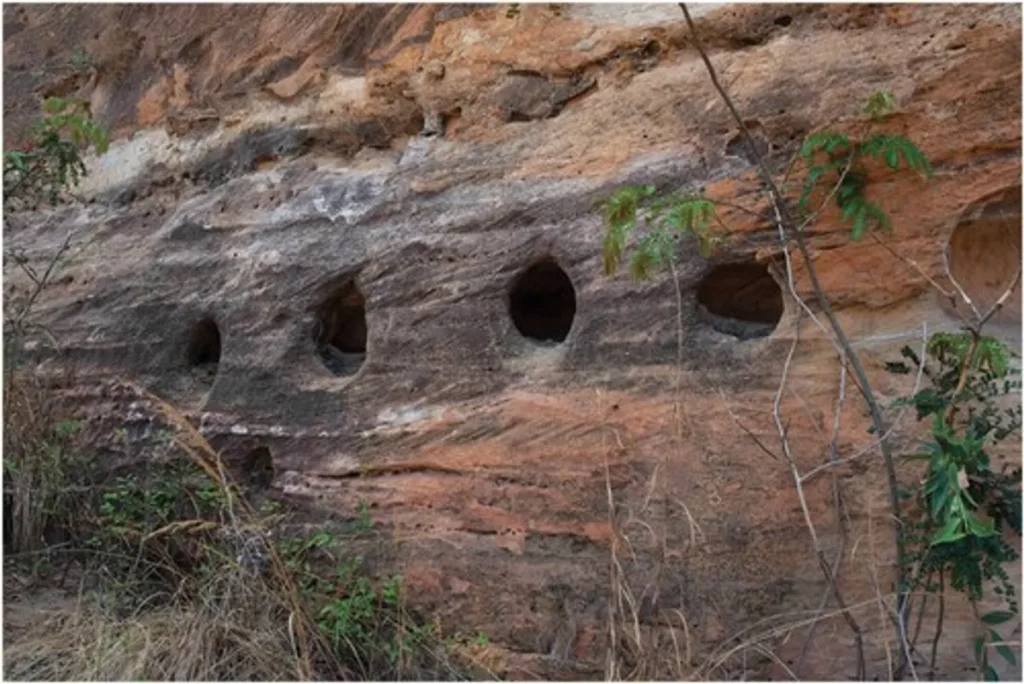
The community left a large archeological site in Madagascar
At the beginning of the last century, French naturalists Alfred and Guillaume Grandidier proposed that the Teniky niches be cut by Portuguese sailors who would have been arrested on the island about 400 years ago. These sailors would have excavated the supporters clubs -based on building refuges while searching for a viable port, which caused the area to be known as “Grotte des Portugais”.
However, in 1963, archeologists Ginter and Hebert rejected this theory, arguing that the construction of niches would require a greater effort than possible for a group of sailors. Although they did not find artifacts related to the niche, they discovered fragments of 16th -century Chinese jugs on Teniky’s slopes.
In 2019, new research with high -resolution satellite images revealed that the archeological site was much larger than it was thought before. The images showed many terraces and structures that had been ignored, leading to Schors and his team to deepen their research.
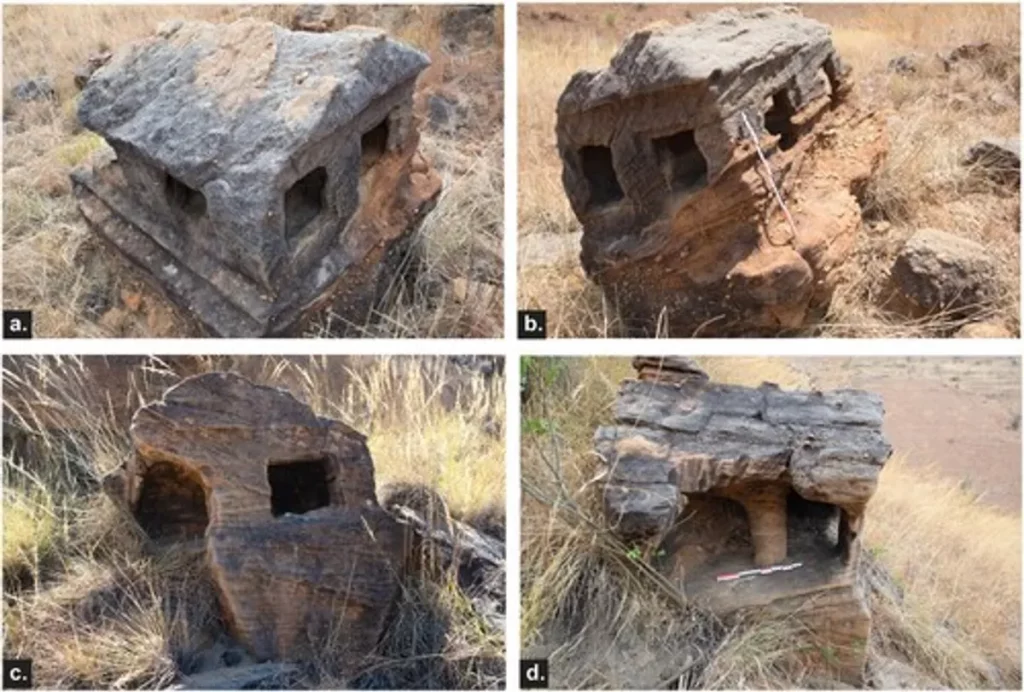
Excavations in places known as Greater Grotte and Petit Grotte, two chambers excavated on the rock, revealed dozens of other circular and rectangular niches. In addition, more than 30 hectares of artificial terraces, stone basins, circular and rectangular structures and fragments of ceramic were found.
The analysis of the fragments of coal and ceramics found that the site was occupied between the 10th and 12th centuries. These fragments did not occur locally, which suggests that the inhabitants of Teniky had connections to the Indian Ocean Trade Network.
Some of the fragments originated from the southern -East Asian and China, dating from the 11th to the fourteenth centuries, which hypothesized that the Portuguese sailors were the creators of the structures, as the first Portuguese vessels only reached the Indian Ocean in 1498.
Given these data, Schreurs and his team expanded their analysis, taking into account the possibility that the inhabitants of Teniky have origins linked to Austronesian, India, Arabia and Persia, given the genetic, linguistic and cultural links of the Malagoes with these regions.
When reviewing the literature, Schreurs observed similarities between the niches and niches of Teniky found in various regions of Iran, including the Fars region, which were used in zoroastal funeral rituals.
These observations led the scientist to hypothesize that the mysterious Teniky population could have Zoroastrian origins. In Iran, the niche cut in the rock were commonly used in funeral rituals, which served as places for bodies or bone exposure.
Read -Ne More:
It is believed that after the Arab conquest of Persia in the 7th century, the communities of Muslims, Jews, Christians and Zoroasters coexisted in Iranian ports and commercial connections to the Indian Ocean continued, possibly leading a Zoroastric community in Madascar.
However, there is a problem in the zoroastric hypothesis: the absence of bones in the place. In Zoroastrian funeral rituals, the bodies were not immediately buried, but they were exposed to stone niches to decompose naturally, leaving only the bones, which were then stored in small circular niches called “Astōdans”. The lack of Teniky bones raises issues, but Schreurs considers the possibility that the remains have been eliminated by later populations.
The Zoroastric hypothesis is still open and new excavations are expected for 2025, including research to identify non -covered structures.