
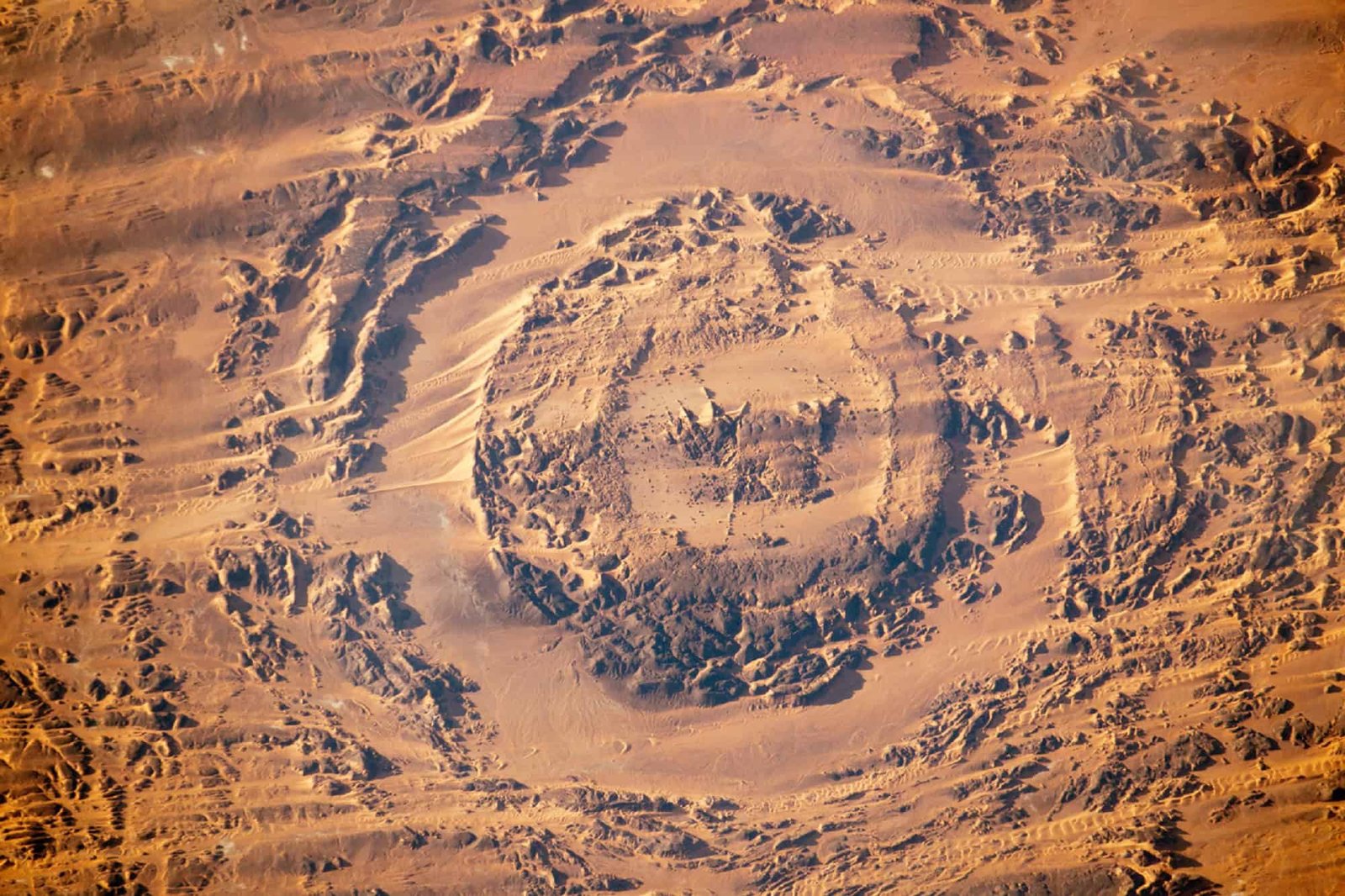
Sahara’s Aorounga crater was created by a meteor
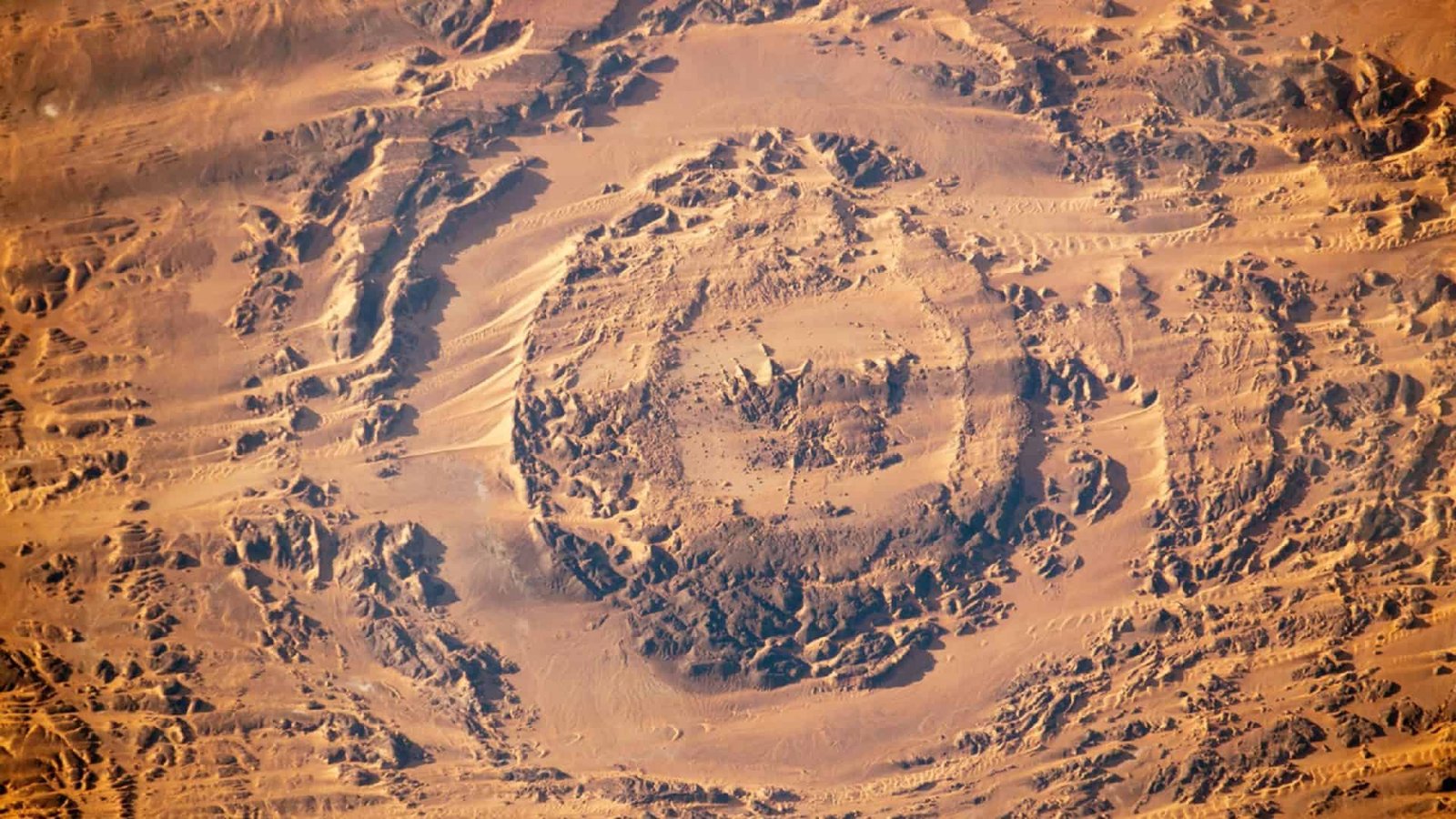
The structure is 12.6 km in diameter and consists of two rings that form its “eye” appearance: an inner ring with a central elevation that resembles a pupil and an external ring that resembles a eyelid. These formations increase up to 100 meters on the surrounding ground, although they have been worn by erosion over time.
According to Lunar and Planetary Institute experts, the crater was created about 345 million years ago, possibly by a 600 -meter diameter meteor, capable of causing large -scale devastation and even global climate change.
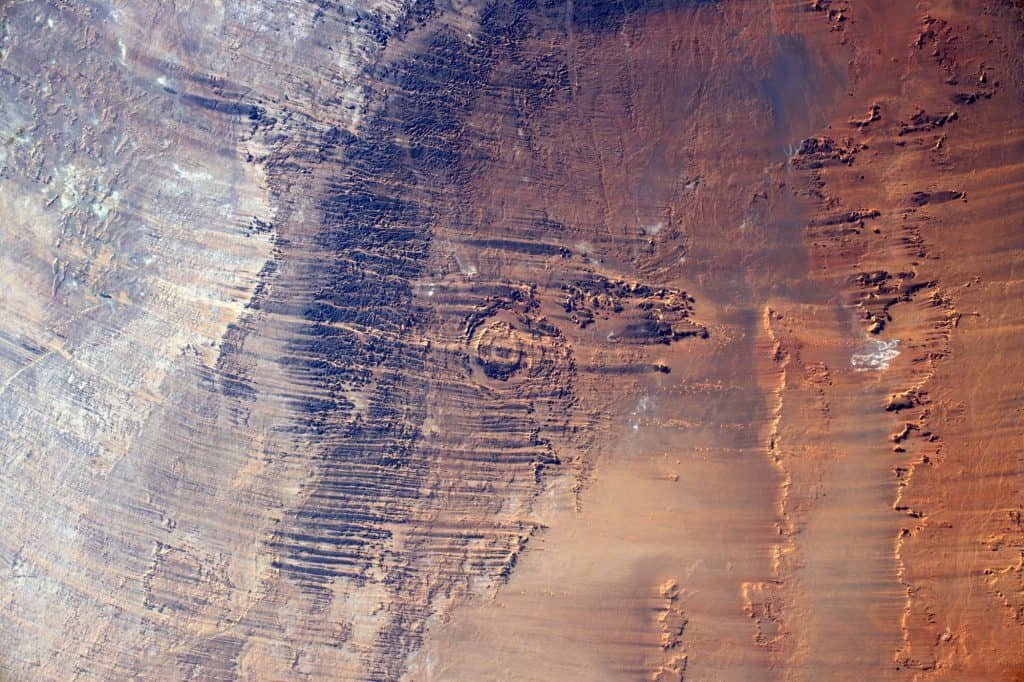
Impact and geological phenomena associated with the crater in the form of an eye
- In addition to its main structure, Aorounga has dark lines on its rings, known as gardens.
- The gardens are massive ridges that can reach 30 meters high and extend to dozens of miles around the crater.
- These formations were sculpted by the constant winds of the region, contributing to the unique landscape of the place.
- Research with radar images in the late 1990’s indicates that Aorounga can be part of a chain of craters.
- According to planetary society, at least two smaller craters were identified, possibly made up of fragments of the original meteor.
Read -Ne More:
Migratory dunes in the Sahara
Surrounding the crater, they are barchial dunes or “moon -shaped”, which constantly move under the action of the winds. Observations between 2003 and 2013 revealed that five of these dunes moved between 275 and 405 meters during this period. Interestingly, the smallest dunes, which tend to move faster, were the most mobile, aligning with the well -known behavior of these phenomena.
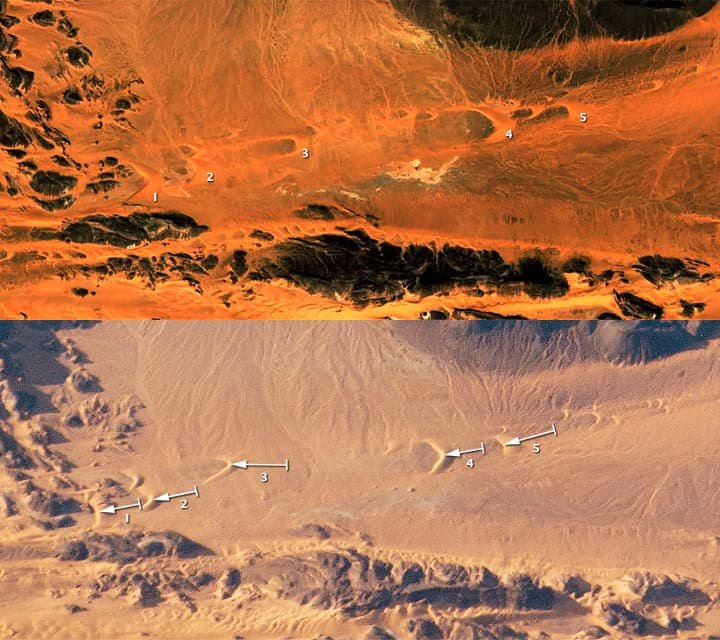
The monitoring of these dunes, made with satellite images, helps scientists to better understand their dynamics. This knowledge can be used to predict sand displacements, minimizing impacts such as road blocking or burial in agricultural areas.