
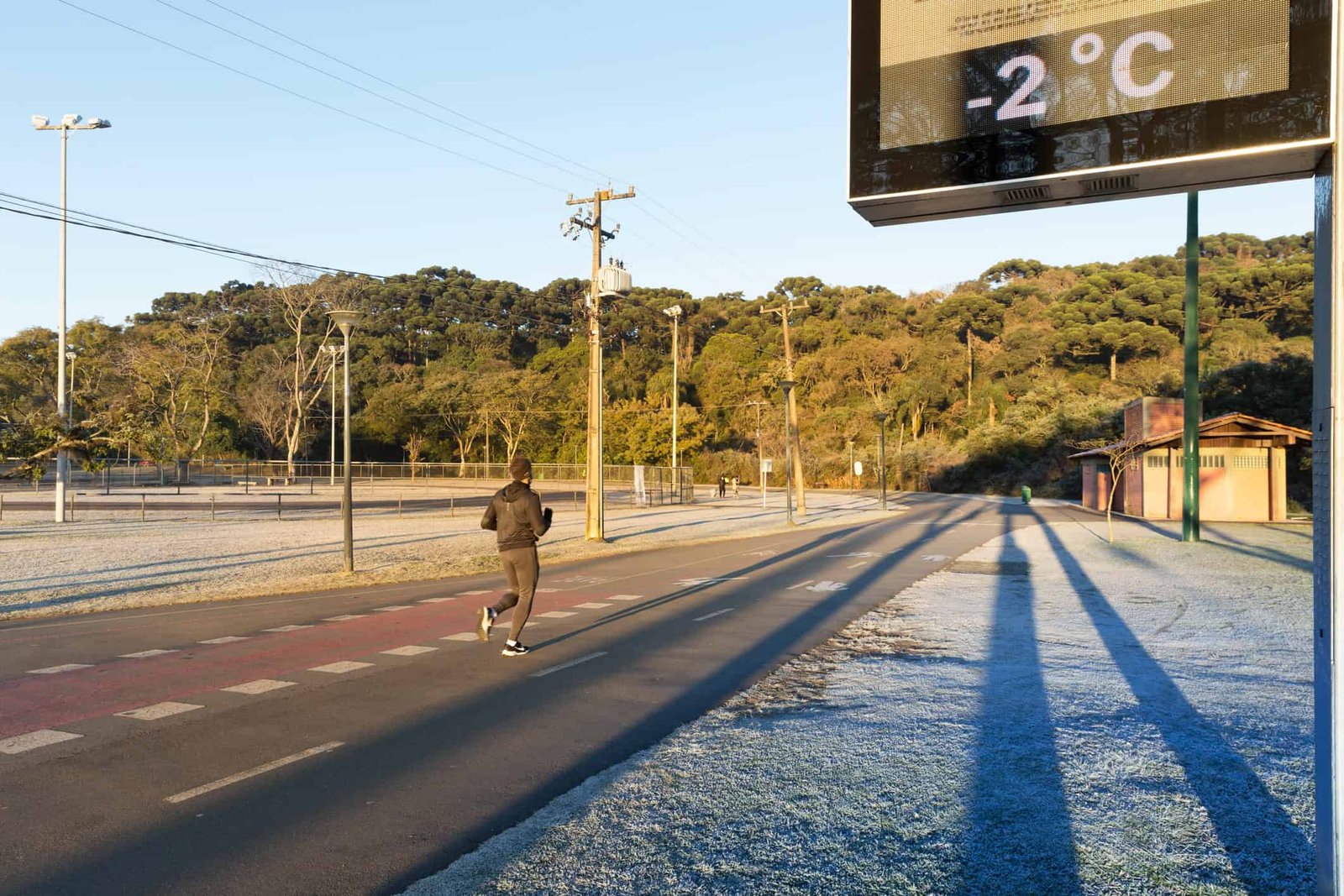
Contrary to popular belief, climate change can also cause cold waves above normality. And, according to data, they were published by the European Copernicus Observatory, this is exactly what happened in June in part of the planet.
Researchers say that Europe, North America, Central Asia and some parts of Western Antarctica have faced another extreme heat wave in the period. On the other hand, the regions of the southern hemisphere, such as Argentina, Chile and even Brazil, had lower temperatures than normal.

Proof of imbalance in the planet’s climate system
- According to the European Observatory, some parts of India and East Antarctic also had the temperatures expected below June.
- Scientists say that this combination of extremes does not mean a decrease in the effects of climate change.
- On the contrary, this would be the reflection of the growing imbalance of the planet’s climate system.
- That is, temperatures can vary beyond normal, up or down.
- However, the tendency is that the global average of thermometers will continue to increase in the coming months and years.
Read -Ne more

Colder more intense than expected in some parts of Brazil
The data from the National Meteorology Institute (IMMET) reinforce the conclusion of European scientists. During the last month, the south, the south -east and the middle western of the regions of Brazil, faced temperatures lower than normal during the period. On June 25, for example, cities such as General Carneiro (PR), São José Dos Ausentes (RS) and Curitibanos (SC) recorded temperatures of -7.8 ° C, -4.5 ° C and -4.7 ° C, respectively. They were the coldest in Brazil.
The cold air mass also advanced to the South South Region -causing significant falls for the temperature, such as Monte Verde (MG), which recorded a minimum of -2.9 ° C, and Bar DO Turvo (SP), where the temperature reached -2.3 ºC in the middle west region, the effects were also heard, as in seven falls (MS), where the minimum reached –0.9 ° C, Amambai (MS).

Another example of this phenomenon was the city of Porto Alegre, in Rio Grande do Sul. The average temperature of state capital in June 2025 was 14 ºC, and was 0.8 ºC below the historical average. The average monthly temperature was 10.2 ° C, 1.1 ° C less than expected.