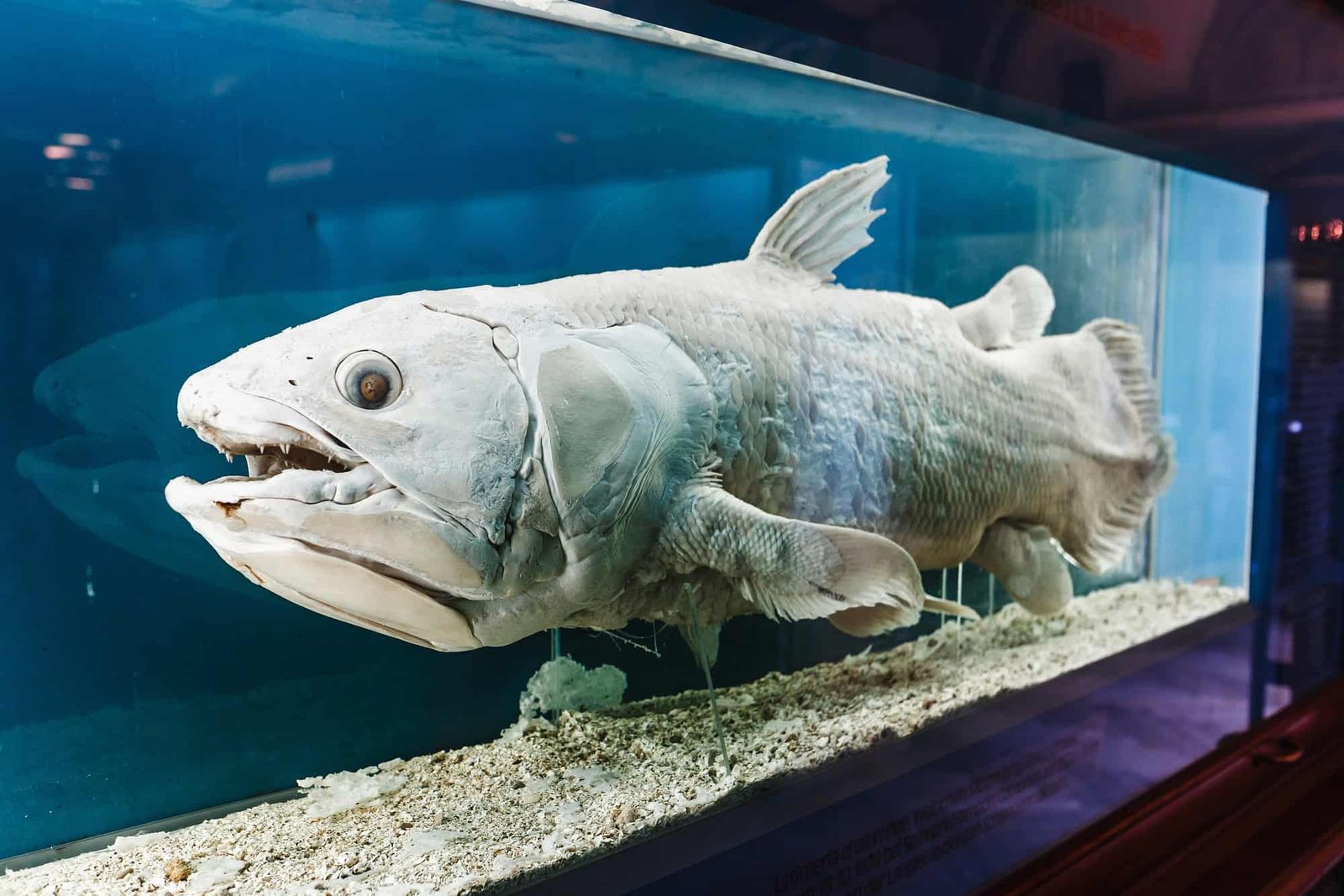
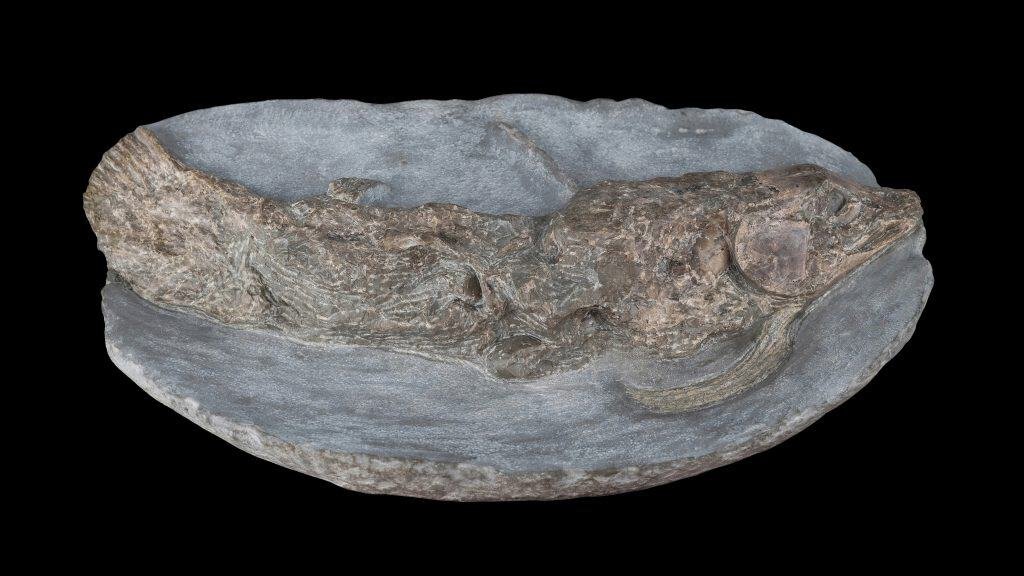
One of the most studied fish in history is Celasanto. And it is not strange: its first fossil dates to 419 million years ago, that is, long before the dinosaurs appeared.
Scientists, by the way, long believed that the species had extinguished along with the large reptiles 65 million years ago. This belief lasted until 1938, when a South Museum’s commissioner -African made an unprecedented discovery: he found one of those fish on a local fishing boat.
Read -Ne more
The specimens found were very similar to known fossils. This in itself was already gigantic. The Celacantos, however, are even more important. They have paired lobed fins, which extend from the body as if they were legs.
According to researchers, this causes Celasantos to resemble the first terrestrial animals in history. Remembering that, according to science, life was born in the water and it took millions of years to firm on Earth. Celacantos can help show how this transition took place.
It is for these reasons that the specimens of species that live to date have received the nickname “living fossils”.
Where we find them, and more about the Ceacantos
- These fish reside in the ocean, at depths of up to 800 meters.
- Today there are two species: one that lives near the similar islands, on the east coast of Africa and another found in the waters of Sulawesi, Indonesia.
- During the day, these animals are found in volcanic caves alone or in small groups.
- The females are slightly larger than men, reaching about two meters long and weigh up to 110 pounds.
- They are usually blue or bluish gray.
- A study claims that “timid” species can live up to 100 years, 5 times more than initially believed.
- This has to do with its slower rhythm, and the slower evolutionary curve.
- It is where the following topic comes in.
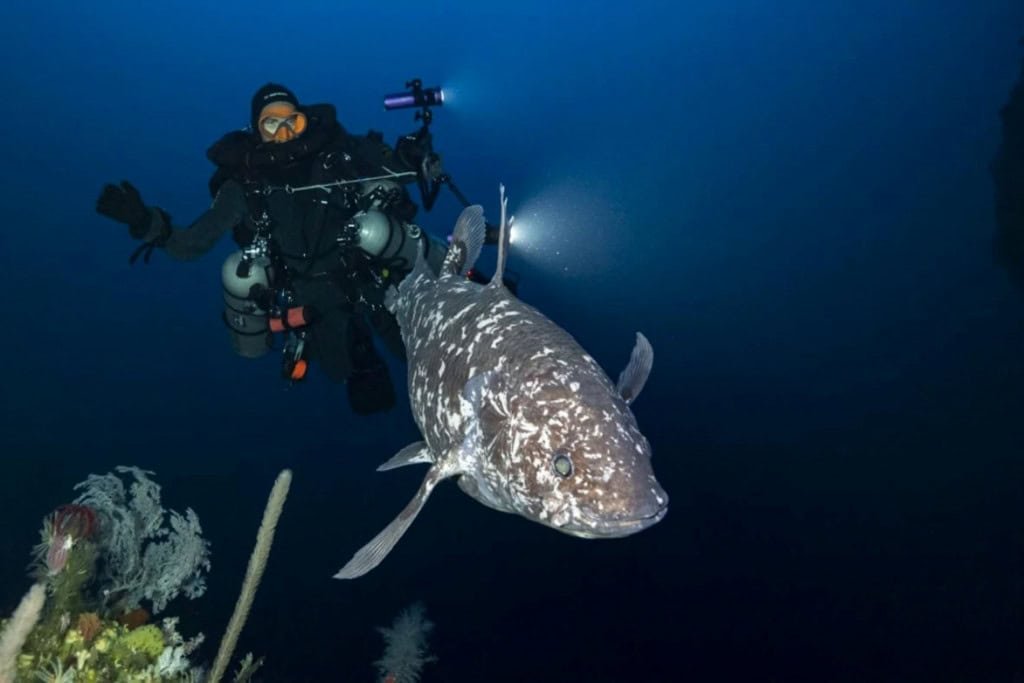
Is it a fossil alive or not?
For a long time, the scientific community called these types of living fossils. More recent studies, however, criticize this nomenclature.
An article from Nature Communications, for example, states that this concept is wrong, as current copies are different from the fish that lived in the Devonian period.
To demonstrate this point, the Quebec University team studied a fossil from a place called Gogo Formation, in Eastern Australia. This area was a tropical recording more than 380 million years ago, where more than 50 species of fish, including Celasantos, lived. And the remains have shown that these are morphologically different animals.
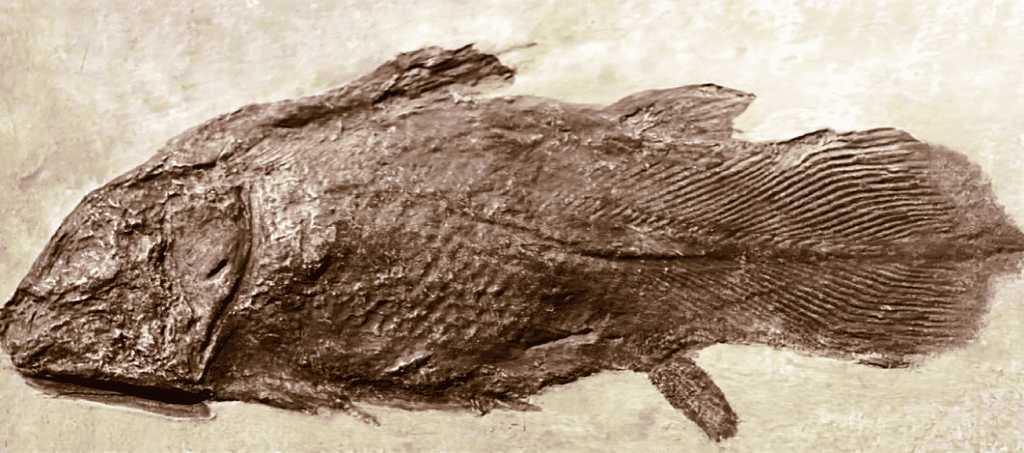
One hypothesis is that today’s cells are very much like their ancestors due to their slower evolutionary curve. Time, by the way, seems to work differently for Celasantos.
To get an idea, women have been wearing their puppies for five years, the best -known period of gestation of all animals. In addition, individuals take 55 years to reach sexual maturity.
Given these data, researchers maintain that these fish are not “living fossils”, but an evolutionary species (though very slow).