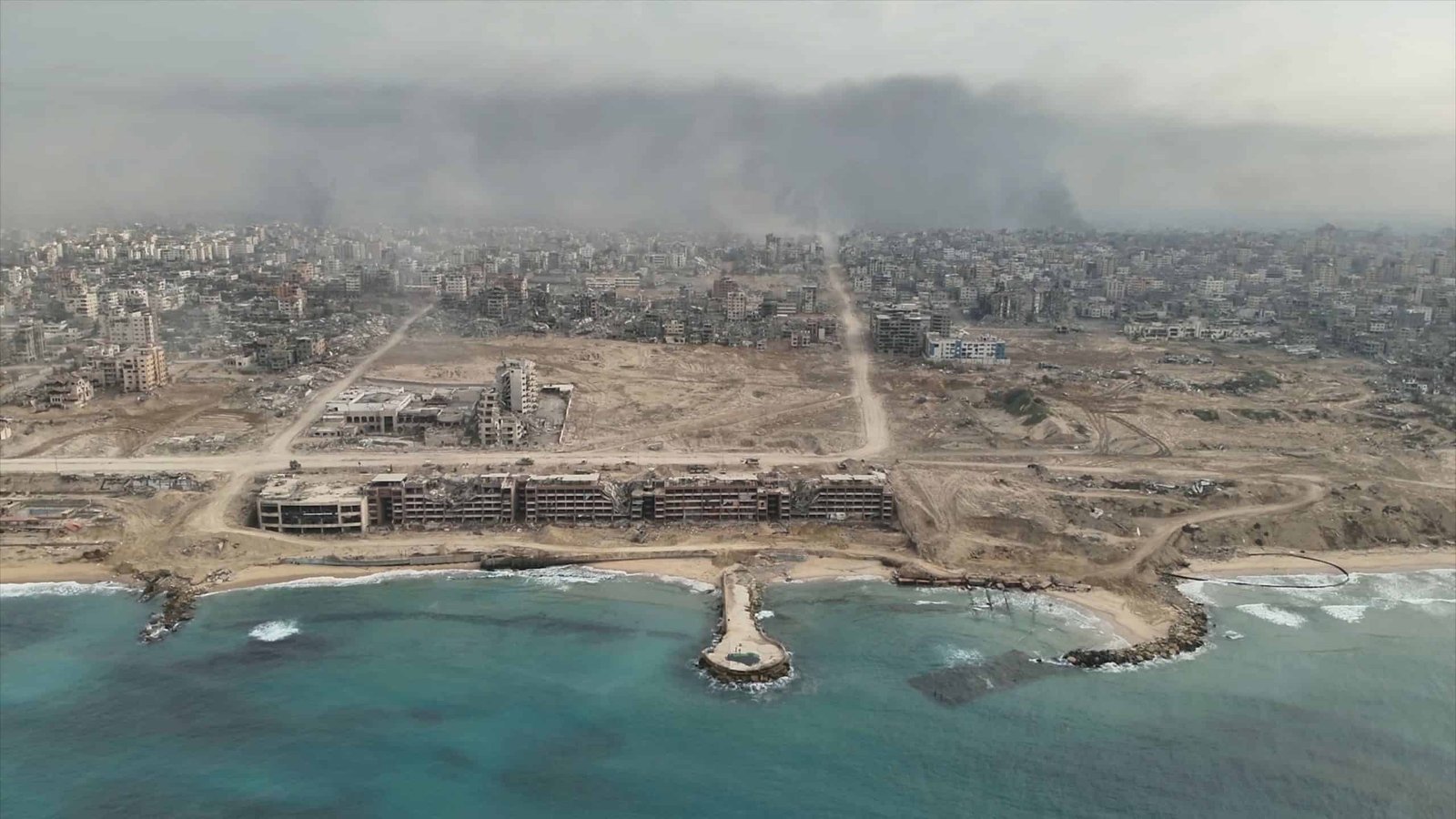
A territory that was forged in the midst of conflicts and is still experiencing the last consequences of a war, the Gaza Strip is one of the most intriguing regions of history between Israel and Palestine. That is why there are many doubts about your past and future. However, the region also attracts international interests, such as the United States.
After all, it is no secret to anyone that the American has always supported the conflict with Israel. However, the U.S. goal became even clearer after Donald Trump’s last statements.
In his recent meeting with Benjamin Netanyahu, the Prime Minister of Israel, Trump announced that he intends to take over the Gaza Strip. He understands now, what exactly is the Gaza Strip and because there is so much interest in the territory.
What is the range of Gaza?
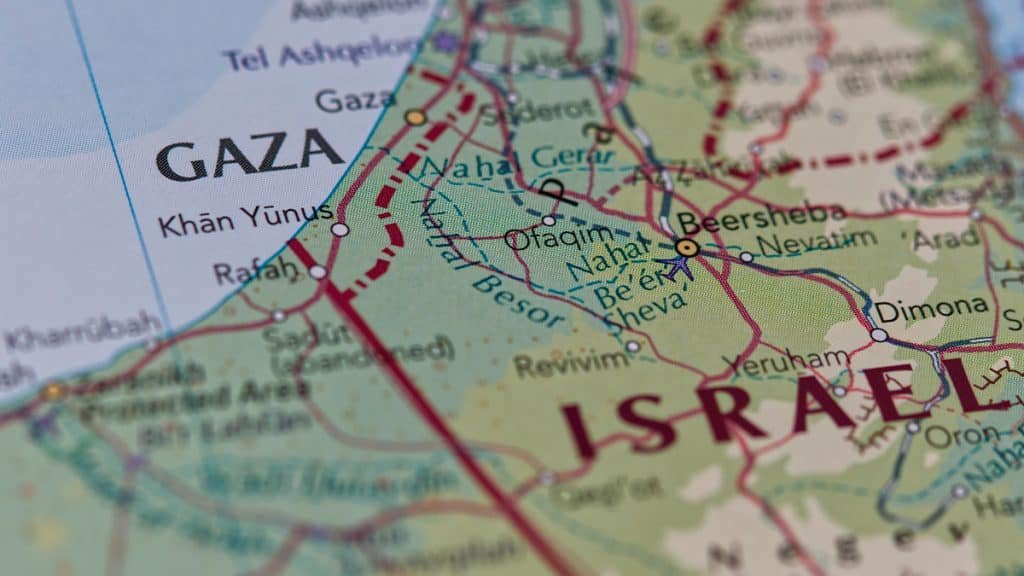
The Gaza Strip is a narrow strip of land located in the Middle East in a region known as Levante. Around it is the Mediterranean Sea (north -west side), the border with Israel (north, east and south -east) and the border with Egypt (south -west).

Its surface is approximately 365 km², which would be considered as the eleventh smallest country in the world. However, although it is such a small territory, it is estimated that its population exceeds 2 million inhabitants.
Thus, in addition to overpopulation, the territory faces extreme poverty and severe structural problems, which are further composed of conflicts in the region. Consequently, their population is predominantly young and most are considered refugees. The Palestinians form the vast majority of inhabitants, and the most venera religion is Islamic.
How did the Gaza range emerge?
Gaza emerged in the fifth century BC, when the Philistines settled on the eastern coast of the Mediterranean Sea in the Middle East. The city has been invaded by several tribes and empires over the years, including Israelites, Babylonians, Persians, Assyrians, Macedonians, Romans and the Ottoman Empire, who controlled the region until World War I.
After 1918, the Gaza region became part of the Nations League mandate in Palestine, under British rule. The Palestinians did not agree with western domination, leading to frequent conflicts.
They consider the part of the Gaza Strip of the State of Palestine, which they want to create, encompassing the entire territory of Israel. In November 1947, the General Assembly of the United Nations decided to divide the Arab-Jueva Palestine, attributing to Gaza and areas adjacent to the Arabs, while the rest of the territory (present Israel) would be with the Jews.
On May 15, 1948, with the end of the British mandate, the first war between Israelis and Arabs began. Egyptian forces quickly entered Gaza, which became the Egyptian headquarters in Palestine.
An intense combat in the fall of 1948 reduced the area occupied by the Arabs to a strip of 40 km long by 8 km wide, known as Gaza.
Read -Ne more
Gaza Strip: Hamas Wars and Control
In 1967, there was the famous six -day war when Israel took the Gaza Strip again. In 1987, the first Intifada began with clashes between the Palestinian and Israeli troops, and the Hamas group appeared, which defends Palestine as the only state.
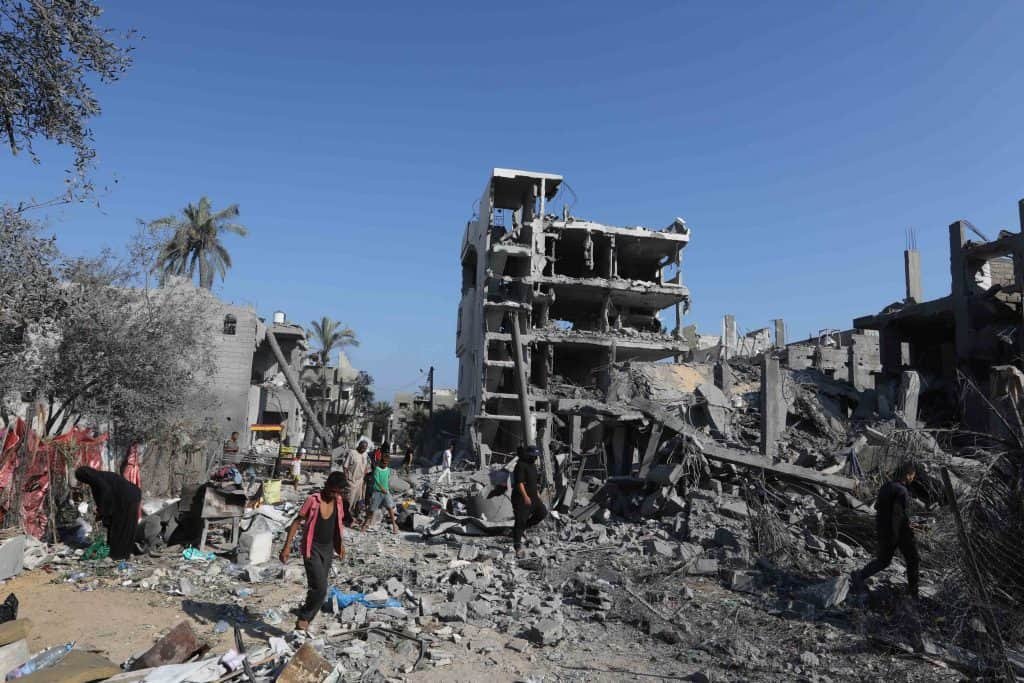
In 1993, the Oslo Agreement established the Palestinian authority for administrative issues, while Israel maintained control of air space, territorial waters and borders.
However, for the surprise of the world in 2005, the Israeli forces were eliminated, with only supervision at the borders of the territory. However, in 2007, Hamas began to govern the Gaza Strip, making the situation worse in the region, because from this change Israel fixed an economic blockade in the region.
Why is the Gaza Strip disputed?
Throughout its history, many countries have entered the dispute to dominate the Gaza Strip, sometimes for religious or territorial interests. However, the participation of the United States, always present in conflicts in support of Israel, has been even more intense this year.
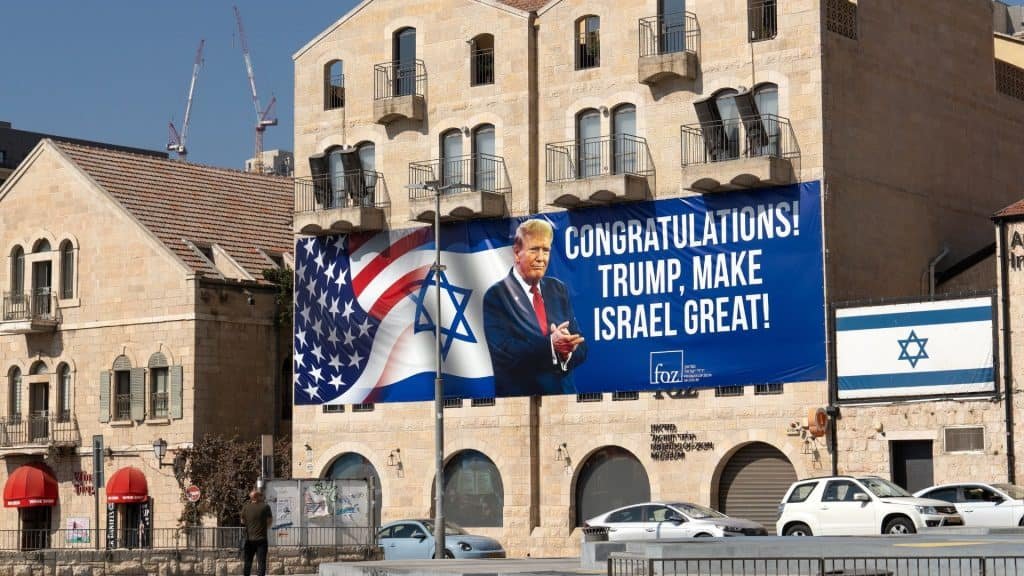
In early February 2025, Donald Trump surprised the world again with one of its governmental goals. In his meeting with the Israeli Prime Minister, the Benjamin Politician Netanyahu, Trump stated that “the United States will take over” in the territory of the Gaza Strip.
He also suggested that the Palestinians leave the region, which indicates Jordan and Egypt to welcome refugees. With this, many have been asked: what would be the real interest of the most influential authority in the world of territory? Check out the possibilities and what some experts say.
Strategic position and fuel exploration
With the Mediterranean Sea on its north side -west, it borders with Israel and Egypt in the south, the territory of the Gaza Strip has a strategic geographical position. In addition, the Gaza Strip can have oil and gas reserves, according to some studies.
According to a 2019 survey by the United Nations Conference on Trade and Development (UNCTAD), the occupied Palestinian territory is above the deposits (gas and oil) with significant amounts of fuels.
The study also said that only oil reserves would generate $ 71 million in the region if they were explored. The numbers are even higher for natural gas reserves, estimating about $ 453 million.
However, according to G1 interview experts, the importance of oil reserves in Gaza for the international community is not very significant yet, and Trump’s reasons are more focused on geopolitical problems than financial.