
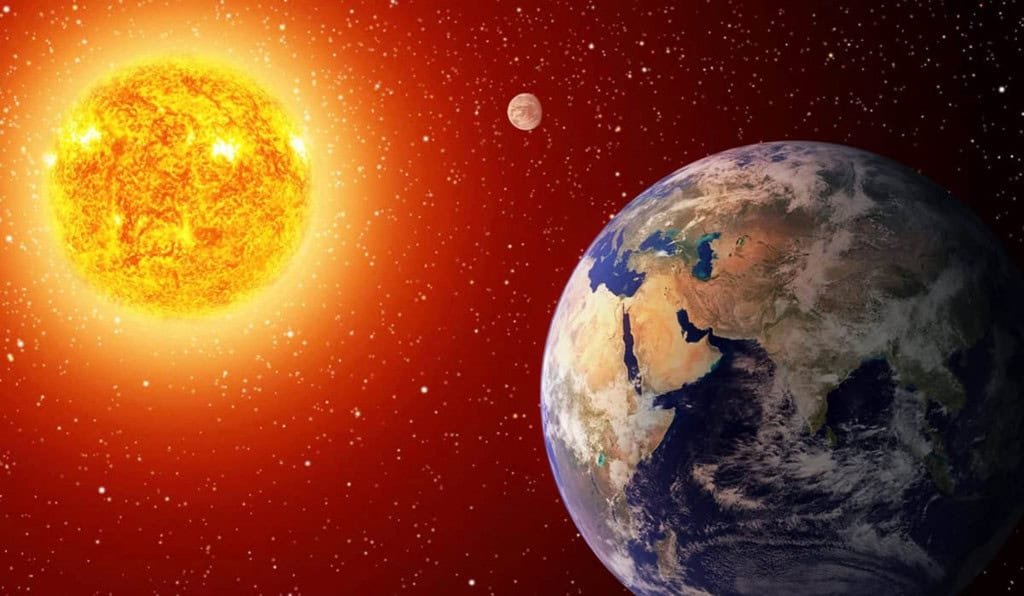
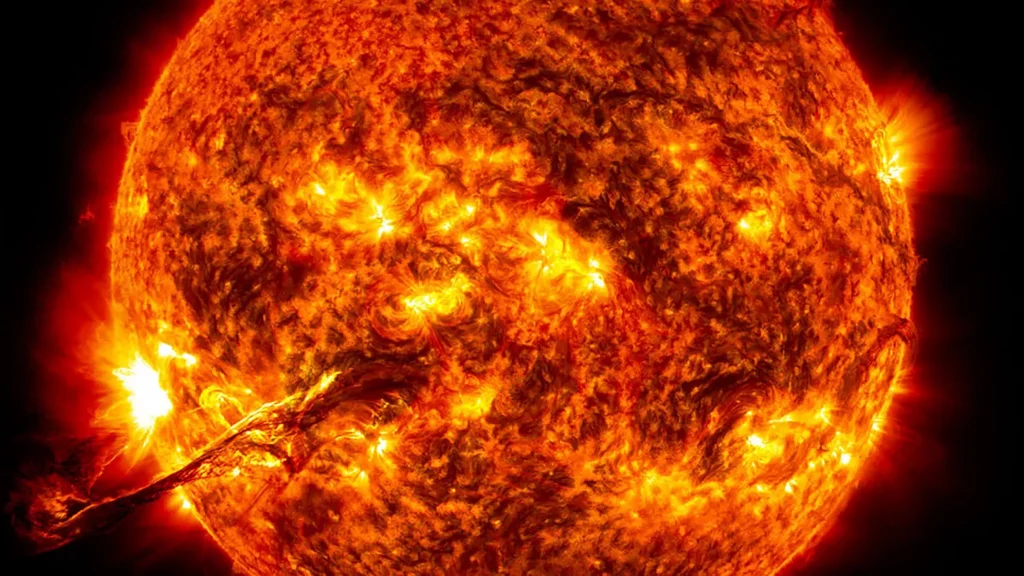
It SunIn addition to being the main source of energy on our planet, it is a Star in constant moving. Explosions, heat waves and intense gas flows make it always vibrant.
But if it happens so much, why have we never heard any noise in space? It is only that, although it is far from silence, the sound cannot reach us in the way we know it.
This is due to the fact that sound needs a medium, such as air or water, to propagate. In space, this medium does not exist. Therefore, there is virtually a gap. Without sufficient molecules to carry the sound waves, the sounds of the sun were getting there.
In fact, it is worth remembering that we are 150 million miles away of that, a route that No sounds can go through the vacuum of space.
The sun me?
Yes, but not as we are used to. Which emits the sun, in fact, vibrations generated by intense movements on its surface and inside. Thus, these vibrations cause oscillations that, if they were in an aerial environment, would produce sounds.
Scientists have been able to record these vibrations with special equipment that capture frequency changes and transform this data into something audible. What we feel about this process is not an original sound of the Sun, but a representation of the faithful sound of the information it emits.
Read -Ne More:
How is the sound that emits the sun? Understanding the noise
When it becomes solar vibrations in sounds by means of a technique called soundnessScientists can create sound bands that simulate the sleep of the sun if the sound could travel through space. The result is curious: a serious and continuous noise that resembles at a constant rate, almost as if the sun had a threatening heart.
It was thanks to the space probe Soho (Solar Observatory and Heliospheric), developed by NASA in collaboration with That ESA And in operation since 1995, scientists have been able to capture these vibrations and turn them into an audible sound here on Earth. Check -ho:
According to the researchers, if possible to hear directly the sound of the star, it would be very high, arriving on top 100 decibelsthat is equivalent to the noise of a rock program. However, since we are surrounded by spatial vacuum, this noise never reaches its ears.
The conversion of solar vibrations into audible sounds allows science to supervise Star activity cycles With more sensitivity. Changes in translated sound intensity, for example, may indicate the presence of solar stains, eruptions or other events that affect the space climate and therefore Communication systems on Earth.
This type of approach also approaches science to the public, making a complex theme in something more palpable and even emotional. After all, listening to the sound of the sun is, in a way, to realize that even the space, silence for us, has its own soundtrack. Just know how to decipher it.
Yes, but since there is no air in space to propagate it, this sound does not reach us.
Of vibrations caused by explosions, gas movements and magnetic activity on its surface and interior.