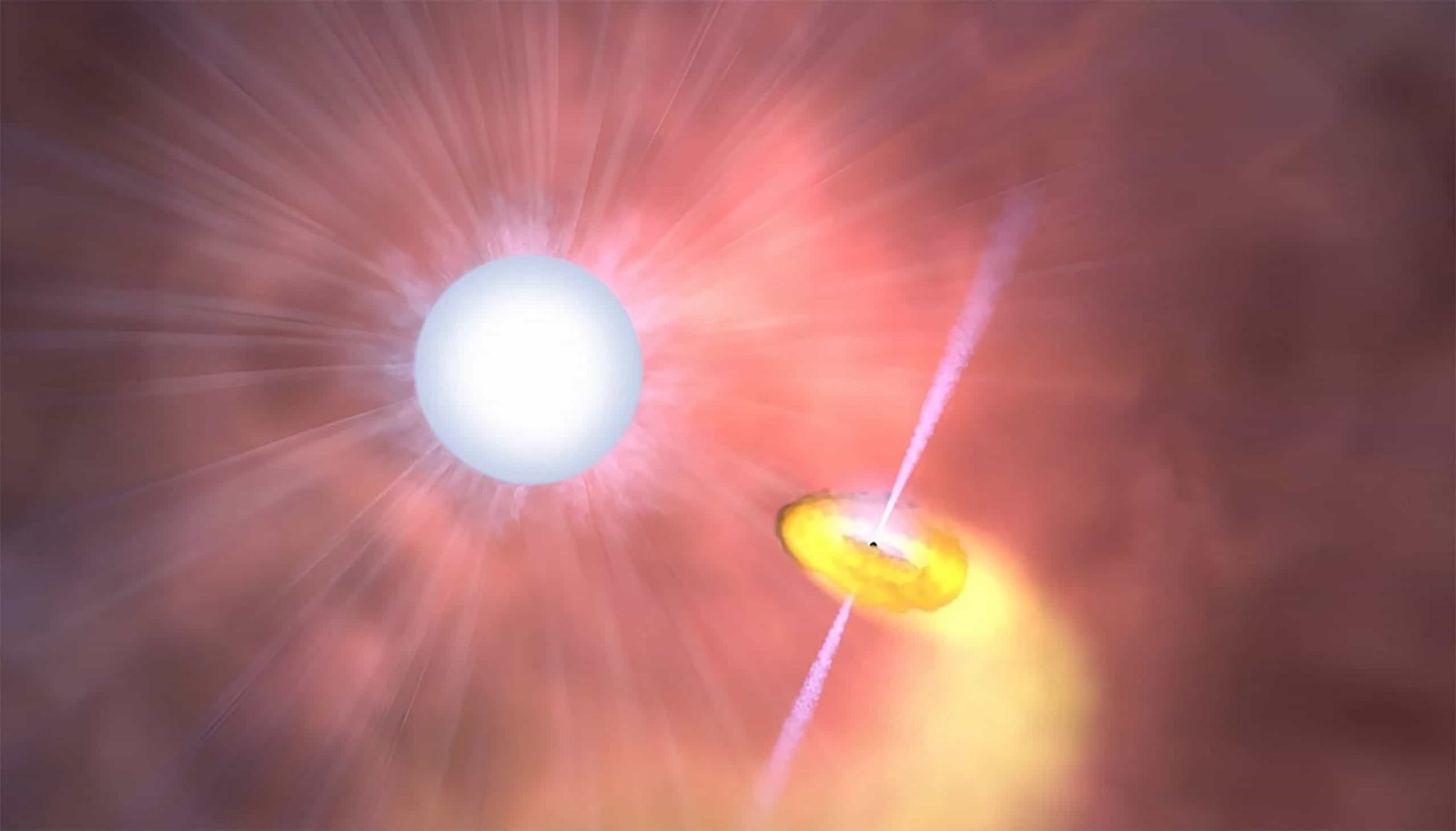
Launched in September 2023, the XRISM Observatory, directed by the Aerospace Agency of Japan (JAXA), recorded the most detailed spectrum of Cygnus X-3, a binary system located about 32,000 years of light in the constellation of Cygnus. This system consists of a star of the wolf jet, one of the most massive and rare that is there, and a compact object that seems to be a black hole.
According to Ralf Ballhausen, a researcher at the University of Maryland and the NASA Goddard Center, which causes Cygnus X-3 to be unique are the intense star winds emitted by Wolf-rayet. “These winds eliminate the gas’s surface gases, which are heated by interaction with the compact object, generating X -ray emissions,” the scientist said in a statement.
Date from @Jaxa_Xrism captured the most detected portrait of gas that flowed when the binary system Cygnus X-3-A with high star as a compact object. Xrism saw that gas was coming out of the massive star and interacting with his companion, causing ripples. https://t.co/SA649owti4 pic.twitter.com/qjdywkudws
– NASA Universe (@nasaunivers) November 25, 2024

The data was obtained by an instrument of XRISM (acronym for the Image Mission of Rajos X and the X -ray spectroscopy), a high precision spectrometer, which analyzed the system for 18 hours in March.
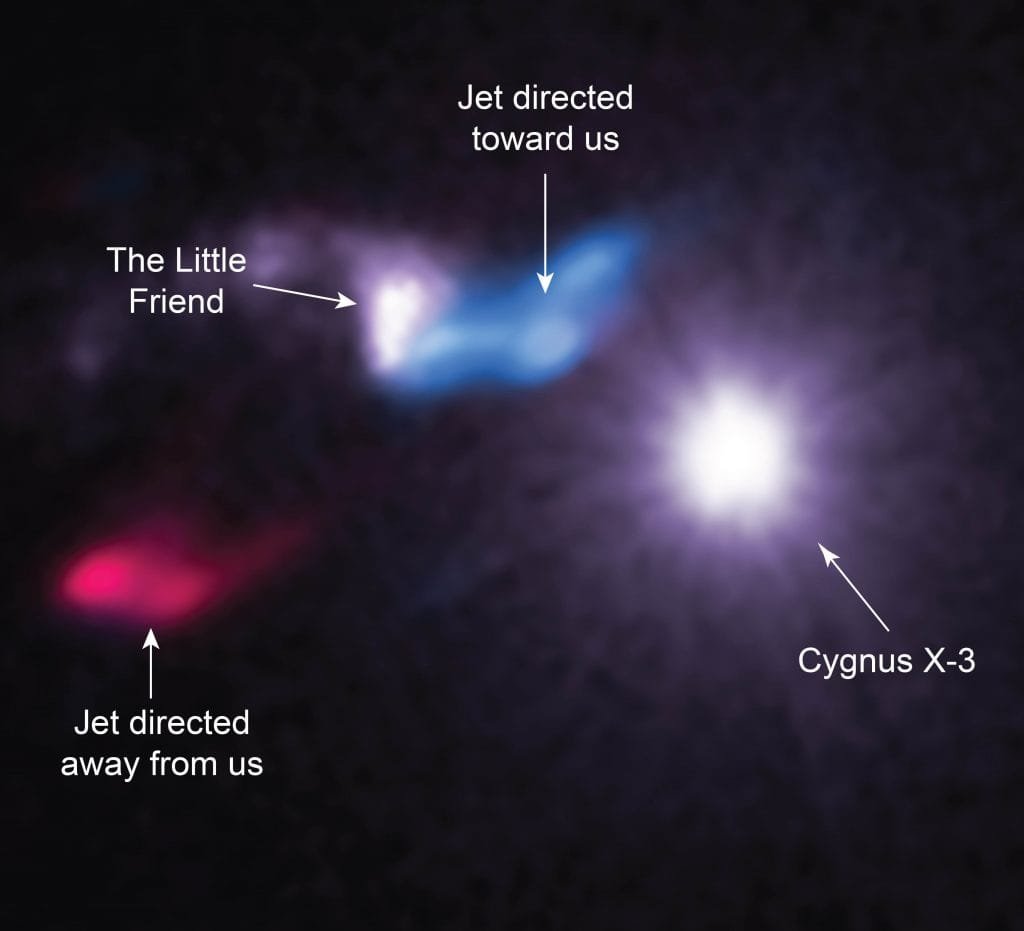
Continuous follow -up can confirm the nature of the black hole
Cygnus X-3 has been widely studied on other bands of light, such as radio, infrared rays and gamma rays, but new X-ray observations provided unpublished information on gas flows around the pair. The proximity between the two bodies, which completes an orbit in only 4.8 hours, creates a turbulent region where gas is illuminated and ionized by radiation.
The recorded spectrum showed X -ray emissions and absorptions with moving characteristics of their normal positions, a effect caused by a rapid gas movement. While the gases moving to Earth reach speeds of up to 1.5 million kilometers per hour, those that move away show weaker emissions.
Xrism observed WR 140, Wolf-rayet Star in Cygnus constellation, about 5,000 light. This supermassive star has spilled its Otergen coat and is on a dramatic path to a supernova explosion. pic.twitter.com/K0wfcemze5
– Xrism (@Xrism_jp) November 26, 2024
According to Timothy Kallman from NASA, star winds are responsible for absorbing a wide range of energies, generating this asymmetric behavior.
Read -Ne More:
Brian Williams, a project scientist, says that the detail obtained was only possible thanks to the continuous control of the system throughout several orbits. This data can help confirm if Cygnus X-3 compact object is, in fact, a black hole.
The results, which will be published in the Astrophysical Magazine, reinforce XISM’s ability to reveal complex phenomena of the universe. The mission, carried out in collaboration with JAXA, NASA and ESA (European Space Agency), emphasizes the relevance of advanced technologies such as the solutions spectrometer to explore dynamic and poorly understood systems.